INSTANT RECURRING PAYMENTS
Instant Recurring Payments: What’s the Opportunity?
A U.S. market and ecosystem assessment of real-time recurring payments
PREPARED BYKeith Raphael · Co-founder and CEO · Straddle
PREPARED FORU.S. Faster Payments Council Board of Directors
PAPER DATESeptember 22, 2025
Contents
- OverviewThe opportunity and strategic perspective
- MarketCurrent volume, value, economics, and change
- ModelHow real-time recurring payments work
- OpportunityAddressable volume and vertical markets
- InclusionUnderserved segments and access
- Use casesHigh-impact applications and stakeholder value
- ExecutionImplementation and strategic recommendations
Executive summary
The U.S. payments landscape is facing a moment of inflection, driven by the accelerating adoption of digital technologies and persistent demand for faster, more efficient transaction methods. Within this evolution, recurring payments, foundational to the burgeoning subscription economy and essential for routine bill payments, present a substantial market opportunity for modernization. This analysis provides an exploration of the current and potentially future state of real-time recurring payments in the United States, leveraging the capabilities of emerging instant payment rails like The Clearing House's RTP (RTP) network and the Federal Reserve's FedNow Service (FedNow).
Today’s dominant recurring payment methods, namely the Automated Clearing House (ACH) network and card networks (credit and debit), face inherent limitations. While ACH offers cost-effectiveness and ubiquity, its batch processing origins lead to settlement delays and reliability issues. Card payments provide faster authorization but suffer from high failure rates by default due to factors like card expiration and spending limits, resulting in significant involuntary customer churn and revenue leakage, particularly for subscription-based businesses. These inefficiencies create a compelling case for alternatives.
Real-time payment rails offer the promise of near-instantaneous settlement, 24/7/365 availability, and enhanced data transmission capabilities. The key mechanism enabling recurring payments on these rails is the Request for Pay (RfP) functionality, potentially combined with payer-authorized standing instructions. However, this capability is still nascent at best, and its widespread adoption hinges on financial institutions (FIs) enabling robust, user-friendly mandate management systems.
The addressable market for payments that could potentially shift to real-time recurring models encompasses a significant portion of the trillions of dollars processed annually via ACH and cards in the U.S. While precise figures for the current Serviceable Available Market (SAM) are difficult to pinpoint due to the early stage of dedicated real-time recurring solutions, projections indicate aggressive growth potential over the next 2-5 years, likely outpacing the broader real-time or recurring payment markets as adoption accelerates. This growth is fueled by strong consumer and business demand for speed and convenience, the potential for significant operational gains, and positive examples from international markets like India and Brazil where real-time recurring payments have gained substantial traction.
However, significant barriers remain. Legacy system integration poses a major hurdle for many FIs, coupled with concerns about implementation costs and heightened fraud risks associated with instant, irrevocable payments. Widespread FI and end-user adoption requires greater awareness, education, and the development of seamless user experiences, particularly around RfP authorization. The “competitive” landscape features well-entrenched incumbents positioned against the allure of an economy where instant and reliable money movement is ubiquitous. Throughout this paper, we hope to provide a thorough - yet accessible - analysis of the current and future state of the U.S. recurring payments market.
Key takeaways: Strategic perspectives on U.S. real-time recurring payments
The U.S. real-time recurring payments market presents a substantial opportunity, potentially trillions of dollars in transaction volume and billions in revenue. However, widescale adoption will not be without its challenges. Unlike other global markets that benefit from regulatory-driven or central bank mandates, the U.S. market's shift towards faster payments hinges primarily on strategic alignment among financial institutions, targeted investments in enabling technologies, and comprehensive Request for Payment (RfP) and mandate management infrastructures. Consequently, the landscape remains complex and disjointed, necessitating deliberate, coordinated actions by stakeholders to realize its full potential:
Financial Institutions: Must define their strategic posture - leader, fast follower, or niche player. This requires targeted investment in core processing modernization, API capabilities, and user-facing mandate tools. Leveraging fintech partnerships will be crucial for many to accelerate readiness and manage implementation costs.
Fintechs & Enablers: Opportunity exists to provide critical orchestration layers, specialized RfP solutions, enhanced data analytics, and superior user experiences, effectively acting as aggregators and capability providers across the ecosystem.
Businesses (Merchants): Should prioritize targeted pilots focused on use cases with high friction or revenue leakage (e.g., reducing involuntary churn). Clear articulation of requirements to FI/fintech partners is essential to drive relevant solution development.
Realizing the full potential necessitates ecosystem collaboration to overcome fragmentation and establish interoperable standards. Near-term progress will likely be use-case driven, focusing on areas where real-time capabilities offer the clearest value proposition over incumbent methods.
1. U.S. recurring payments market dynamics
Recurring payments form a critical component of the U.S. financial ecosystem, underpinning the rapidly expanding subscription economy and facilitating essential routine transactions like bill payments and direct deposits. Understanding the current dynamics, operational characteristics, and economic models of existing recurring payment rails, primarily ACH and card networks, is essential to evaluating the addressability and potential impact of real-time alternatives.
1.1 Current state: Volume, value, and trends
The significance of recurring payments is underscored by their sheer volume and value within the overall U.S. payments system. This segment is largely dominated by two established rails: the Automated Clearing House (ACH) network and the major card networks (Visa, Mastercard, American Express, Discover).
ACH Dominance & Growth: The ACH network, operated jointly by Nacha, The Clearing House (TCH), and the Federal Reserve, serves as the backbone for many types of recurring transactions. In 2024, the ACH Network processed a total of 33.6 billion payments, amounting to $86.2 trillion in value. This represents substantial year-over-year growth of 6.7% in volume and 7.6% in value compared to 2023. Key categories heavily reliant on recurring ACH transactions include:
Consumer Bill Payments and Other Debits: This category saw 16.38 billion consumer bill payments totaling $10.96 trillion in 2024. Within this, prearranged payments (often recurring) accounted for 4.74 billion transactions, while internet-initiated payments reached 10.75 billion.
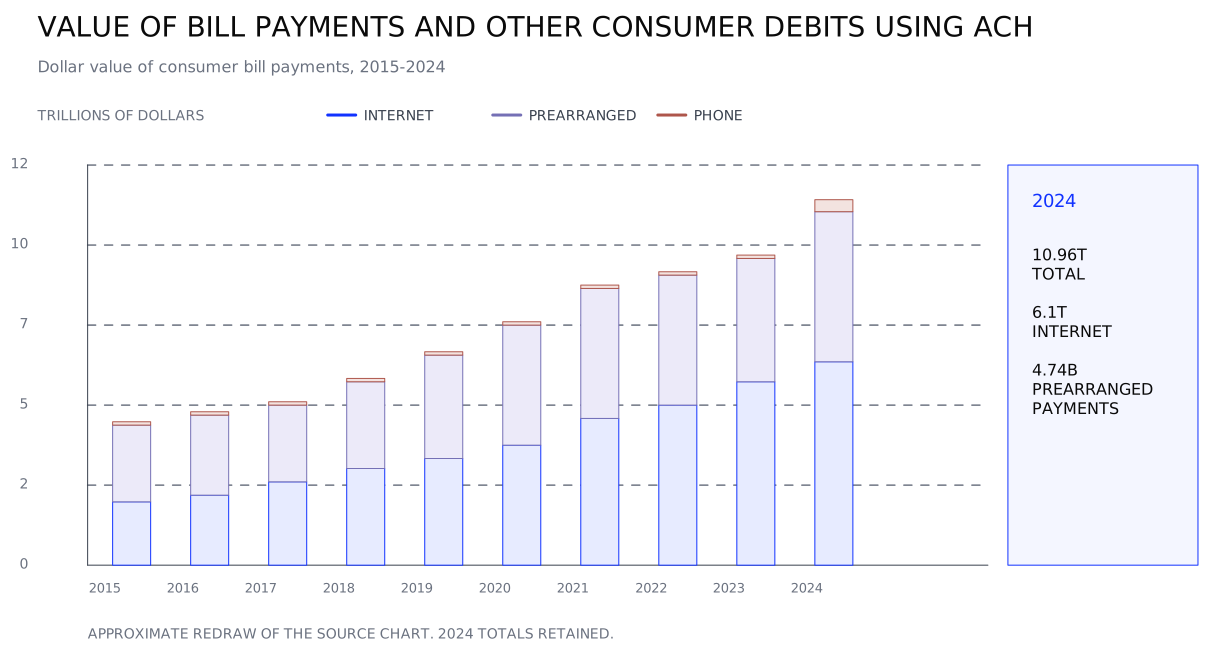
Customer Initiated Entries (CIE), otherwise known as online banking bill pay, accounted for less than 1% of consumer ACH payments in 2024.
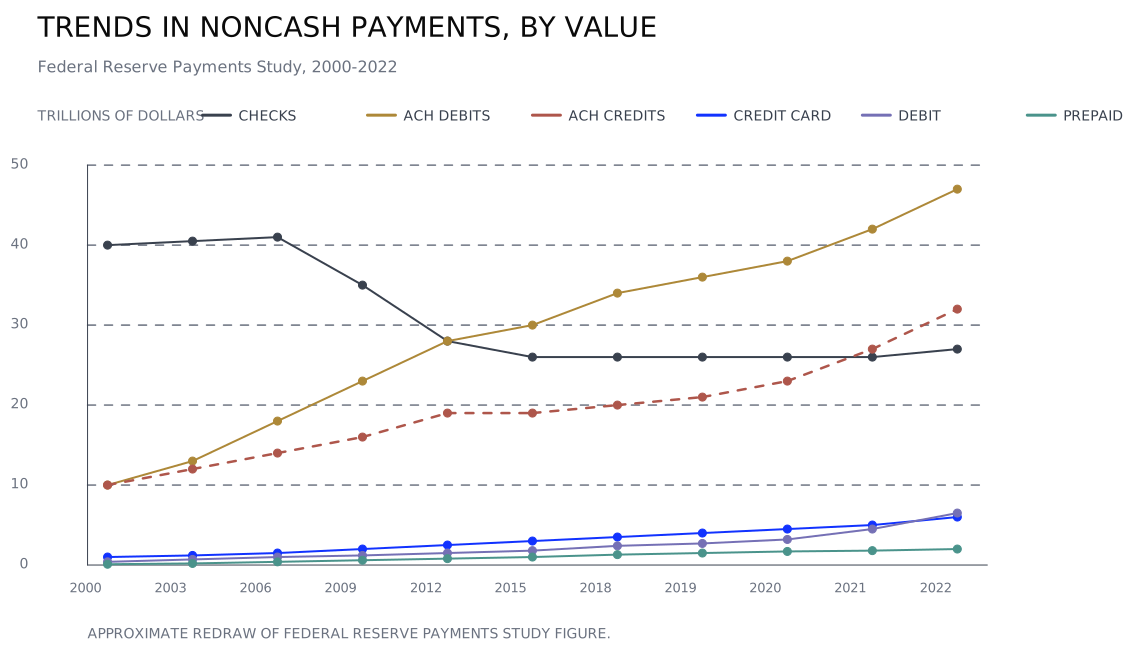
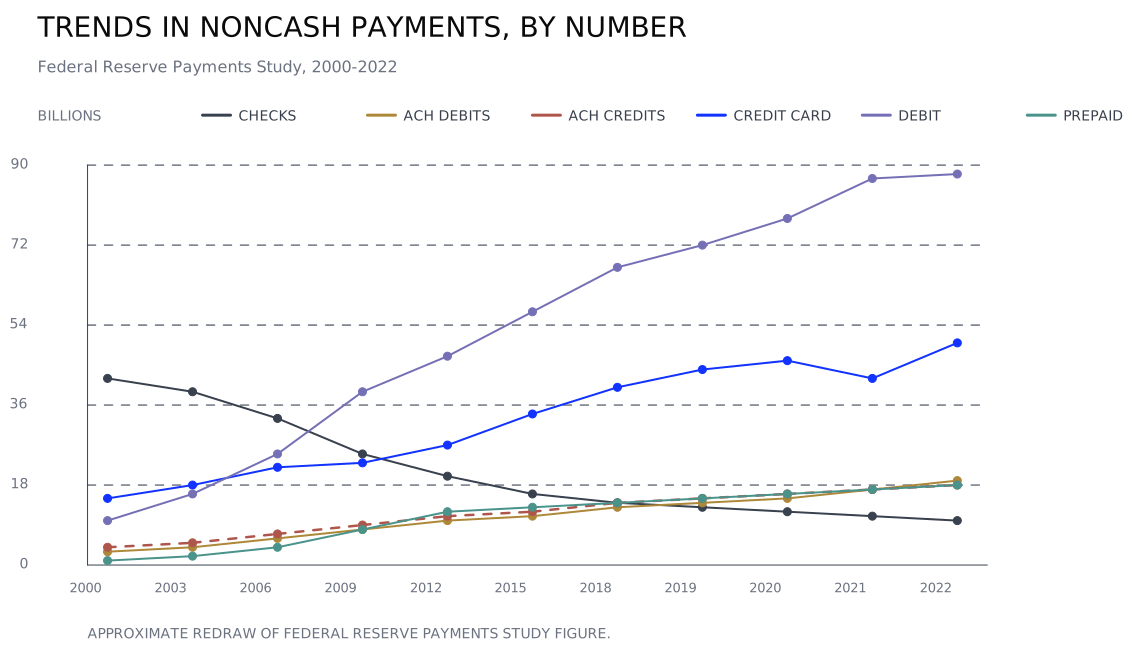
The Federal Reserve Payments Study (FRPS) serves as a critical benchmark for aggregate noncash payment trends, confirming double-digit annual growth in consumer ACH debit transfers between 2018 and 2022. However, it is important to note that publicly available FRPS data often doesn't isolate statistics specifically for recurring payments within broader categories. TCH's Electronic Payments Network (EPN), a private-sector ACH operator, reported processing 20.7 billion ACH transactions worth $56.4 trillion in 2024, reflecting a 6.2% volume increase over 2023. A significant trend within ACH is the rapid adoption of Same Day ACH. In 2024, Same Day ACH volume surpassed 1.2 billion payments ($3.2 trillion value), representing a remarkable 45.3% volume increase from 2023. This surge clearly signals market demand for settlement speeds faster than traditional multi-day ACH cycles. Yet, the persistence of massive standard ACH volume alongside this Same Day growth highlights the enduring appeal of traditional ACH, likely driven by its low cost and entrenched position in established billing processes. This dynamic creates an environment where faster options are desired, but cost and operational inertia remain significant factors, positioning true real-time payments as a potential solution for segments where the value of immediacy outweighs ACH's traditional advantages.
Card Network Role: Card networks process a vast amount of payment volume ($), including a substantial number of recurring transactions, particularly in the consumer subscription space. Visa reported $13.2 trillion in total payments volume processed on its network in fiscal year 2024, across 233.8 billion transactions. Mastercard also reported growth, although specific U.S. recurring volume data is less granular in public reports. Javelin Strategy & Research forecasted the U.S. card-based recurring payment market to reach $830 billion by 2025, highlighting the significance of this channel despite its associated costs. The overall U.S. credit card transaction volume was approximately $5.6 trillion in 2023. Visa and Mastercard dominate card circulation in the U.S. While card networks provide high-level volume data, obtaining specific, detailed figures for U.S. recurring card payments is more challenging than for ACH, where Nacha provides regular statistical breakdowns. Market size estimates for recurring card payments often rely on third-party research, which may lack publicly available, detailed methodologies. This data asymmetry makes direct comparisons between ACH and card recurring trends more difficult.
1.2 Other methods
While ACH and cards dominate, other methods persist. Paper checks continue to decline but are still used, particularly by older demographics for bill payments. Digital wallets such as PayPal, Venmo, Cash App, Apple Pay, and Google Pay are experiencing rapid growth and adoption, especially among younger consumers. They are increasingly used for various payments, including potentially recurring payments, though they are often funded by underlying bank accounts through ACH or by cards.
1.3 Operational characteristics and economics
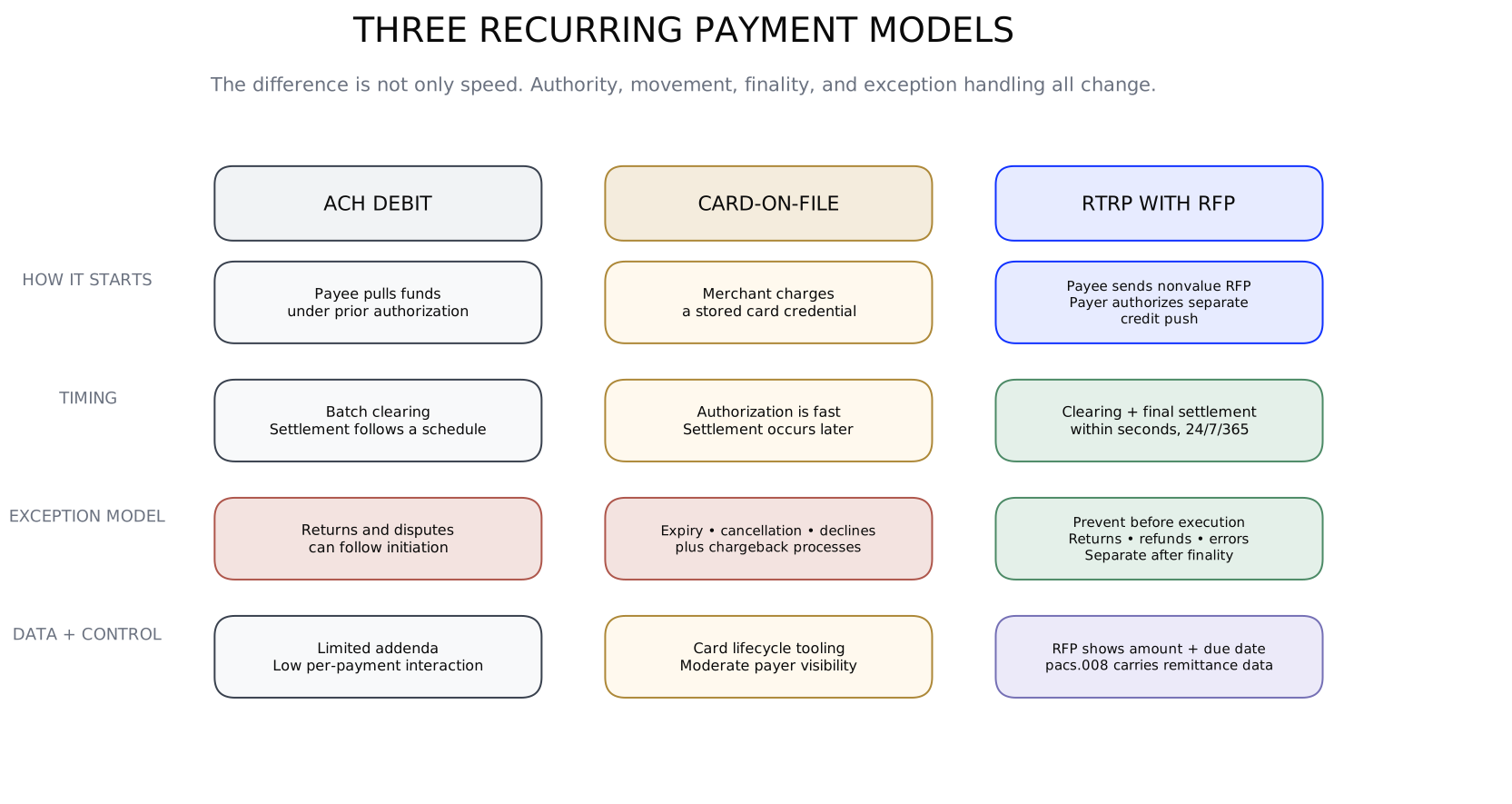
Beyond volume and value, the operational characteristics and economic models of existing recurring payment rails reveal critical friction points that real-time solutions aim to address.
Settlement Times: A key differentiator is settlement speed. Standard ACH payments typically settle at the biller or merchant level within 3-5 business days, processed in batches during specific windows. While Same Day ACH offers end-of-day settlement, and some providers offer faster proprietary ACH options (e.g., T+2, Next Day/Same Day), the fundamental batch nature introduces inherent delays. Card payments offer near real-time authorization, but final settlement between institutions typically takes 1-2 business days. This contrasts sharply with the near-instantaneous, 24/7 settlement promised by real-time rails.
Success/Failure Rates: Both ACH and card payments experience failures, but the nature and frequency differ significantly for recurring transactions.
- ACH: Failures can occur due to insufficient funds (NSF), invalid account numbers, or customer-initiated blocks on debits. ACH provides a dispute process, allowing consumers up to 60 calendar days to dispute a debit on a personal account, while businesses typically have 2 business days. While generally reliable once set up, managing returns and exceptions adds operational complexity.
- Cards: Recurring card payments suffer from notoriously high decline rates, with estimates ranging from 15% to over 35%. Primary causes include expired cards, insufficient funds or exceeded credit limits, payment processor errors, cards reported lost or stolen, and generic bank declines often unrelated to the customer's willingness or ability to pay. This high failure rate is a major driver of involuntary customer churn, estimated to account for 20% to 50% of all churn for subscription businesses.
Retry Patterns & Economics: The high failure rate of recurring card payments necessitates sophisticated retry strategies. Businesses must differentiate between soft declines (temporary issues like NSF, potentially resolvable with a retry) and hard declines (permanent issues like invalid card, requiring customer intervention). Effective strategies involve analyzing transaction data to optimize retry timing (e.g., retrying after payday), identifying declines with low retry success rates, and potentially prompting customers to update payment information. Managing these retries and associated dunning communications adds significant administrative overhead. Economically, ACH generally offers lower transaction costs. Fees typically range from a flat $0.20-$1.50 per transaction or a small percentage (0.5%-1.5%). ACH return fees ($2-$5) and reversal/chargeback fees ($5-$25) can apply. Card processing fees are typically higher, often involving an interchange fee plus processor markups, commonly ranging from 1.5% to 5% of the transaction value, plus a fixed per-transaction fee. These percentage-based fees can become substantial for businesses processing many recurring payments.
The combination of high failure rates and higher processing costs for recurring card payments creates a significant economic burden for businesses, particularly those reliant on subscription revenue. This financial drag encompasses not only direct processing fees but also the cost of lost revenue due to involuntary churn and the operational expenses associated with payment recovery efforts. This economic pressure serves as a powerful incentive for businesses to seek more reliable and cost-effective alternatives like ACH, and increasingly, to explore the potential of real-time account-to-account payments.
Friction Points: In summary, the key friction points in existing recurring payment methods include:
- ACH's inherent unreliability, fraud vectors, settlement delays and batch processing limitations.
- The high failure rate of card payments, leading directly to customer churn, revenue loss, and negative customer experiences.
- The administrative burden and cost associated with managing card declines, retries, and dunning processes.
-
Data security risks and compliance burdens (PCI DSS) associated with storing sensitive card information for recurring billing.
-
Payer Experience Issues: From the payer's perspective, both dominant methods often fall short in terms of transparency and control. ACH Debits, once authorized, typically occur with little direct interaction or pre-notification for each specific transaction, potentially leading to unexpected overdrafts if funds are insufficient. Managing or cancelling recurring authorizations can sometimes be cumbersome. Similarly, while CoF setup might be convenient initially, managing multiple stored cards across various merchants and tracking upcoming charges can be challenging. The opaqueness of error resolution processes and the financial sting of late fees and NSF fees contribute significantly to consumer dissatisfaction and financial stress.
-
Payee Operational Burdens: Beyond direct transaction costs and failure rates, payees grapple with substantial indirect operational overhead. Managing payment exceptions (Chargebacks, NSFs, declines), reconciling payments (especially when remittance data is limited), handling customer service inquiries related to payment failures or confusion, and managing collections processes all consume significant resources. These operational complexities detract from core business activities and add hidden costs to accepting recurring payments.
These combined weaknesses, operational complexity and delays in ACH, and high failure rates and costs in cards, highlight the market's need for a payment solution that merges the direct bank-account reliability of ACH with the speed of card authorization, while minimizing the failure points inherent in both. Real-time payment rails aim to fill this gap.
Table 1: U.S. Recurring Payment Volume & Value by Rail (2024 Estimates)
| Payment Rail | Estimated 2024 Recurring Volume (Billions of Transactions) | Estimated 2024 Recurring Value (USD Trillions) | Key Trends/Growth Drivers | Major Friction Points |
|---|---|---|---|---|
| ACH (Consumer Bill Pay Est.) | ~10-12 Billion Estimate | ~$6-8 Trillion Estimate | Cost-effectiveness, Reliability, Same Day ACH growth | Slow settlement (batch), Lack of real-time confirmation |
| ACH (Direct Deposit Est.) | ~8.6 Billion | ~$15.8 Trillion | Payroll, Benefits, Established processes | Primarily credit-push; not typically consumer-paid recurring |
| Credit/Debit Card (Estimate) | Significant, but specific recurring data lacking; estimate: 1 in 10 card payments | Estimated ~$1.25 Trillion | Consumer preference, Subscriptions, Rewards | High failure rates (15%+), High cost (%), Churn (extreme) |
| Debit Card (Estimate) | Significant, but specific recurring data lacking; estimate: 1 in 10 card payments | Substantial, part of overall card volume | Convenience, Budget control | High failure rates (similar to credit), Cost (less than CC) |
| Other (Checks, Digital Wallets) | Declining (Checks) / Growing (Wallets) | Moderate / Growing | Wallet convenience, Legacy use (Checks) | Wallet dependency on underlying rails, Check inefficiency |
Author's note: Estimates for recurring portions of ACH Bill Pay and Card volumes are derived approximations based on total volumes, market reports, and typical use cases. Direct, publicly reported figures specifically isolating recurring transactions are limited, especially for cards.
2. The shifting landscape of recurring payments in the U.S.
2.1 Dominance and scale of traditional recurring payments
Recurring payments form a critical pillar of the modern U.S. economy, facilitating predictable revenue streams for businesses and providing convenience for consumers across a vast array of goods and services. Their significance is underscored by the sheer volume and value processed through established channels. In 2024 alone, the ACH Network processed 16.38 billion transactions categorized as "Consumer Bill Payments and Other Debits," totaling $10.96 trillion in value. While this category includes more than just recurring payments, it highlights the massive scale of consumer-initiated debits where recurring transactions are prevalent. This immense scale signifies that even incremental shifts towards more efficient payment mechanisms can yield substantial economic benefits.
Currently, the landscape is dominated by two primary methods: ACH Debit and Card-on-File (CoF) payments. ACH, particularly ACH Debit where a payee is authorized to pull funds from a payer's account, serves as the workhorse for a large volume of recurring bill payments, including mortgages, utilities, and loan repayments. Its prevalence is largely attributable to its historically low per-transaction cost for payees and its deeply embedded infrastructure within the U.S. banking system. CoF payments, where consumers authorize merchants to store their card details for future transactions, are also highly significant, particularly prevalent in e-commerce, digital subscriptions (streaming services, software), and certain types of bill payments where convenience and reward programs are key drivers for consumer adoption. Combined Visa and Mastercard purchase volume in the U.S. reached $9.367 trillion in 2024, indicating the vast scale of card usage, though isolating the recurring portion remains difficult based on publicly available network data. The coexistence of these two dominant methods points towards a market serving diverse needs and preferences, setting a complex baseline for any new entrant like RTRP.
2.2 Critical pain points and limitations of current methods
Despite their widespread use, both ACH Debit and CoF suffer from inherent limitations and create significant pain points for payers and payees alike.
- ACH Debit: While valued for its low cost, the ACH network operates on a batch processing model, resulting in payment latency - funds are not available to the payee immediately, and settlement can take one to two business days. This delay impacts payee cash flow and introduces uncertainty. ACH payments lack true finality, meaning they can be returned unpaid days after initiation, most commonly due to Non-Sufficient Funds (NSF) in the payer's account. These NSF returns trigger a cascade of negative consequences: consumers face hefty fees (typically around $20-$25 per instance, contributing to over $5.8 billion in combined overdraft and NSF fees paid in 2023), potential service disruptions, and damage to their financial standing. For payees, NSF returns translate into lost revenue, increased operational costs for exception handling and reprocessing, strained customer relationships, and expensive collection efforts. The lack of robust data transmission capabilities within traditional ACH formats also complicates reconciliation for businesses receiving bulk payments.
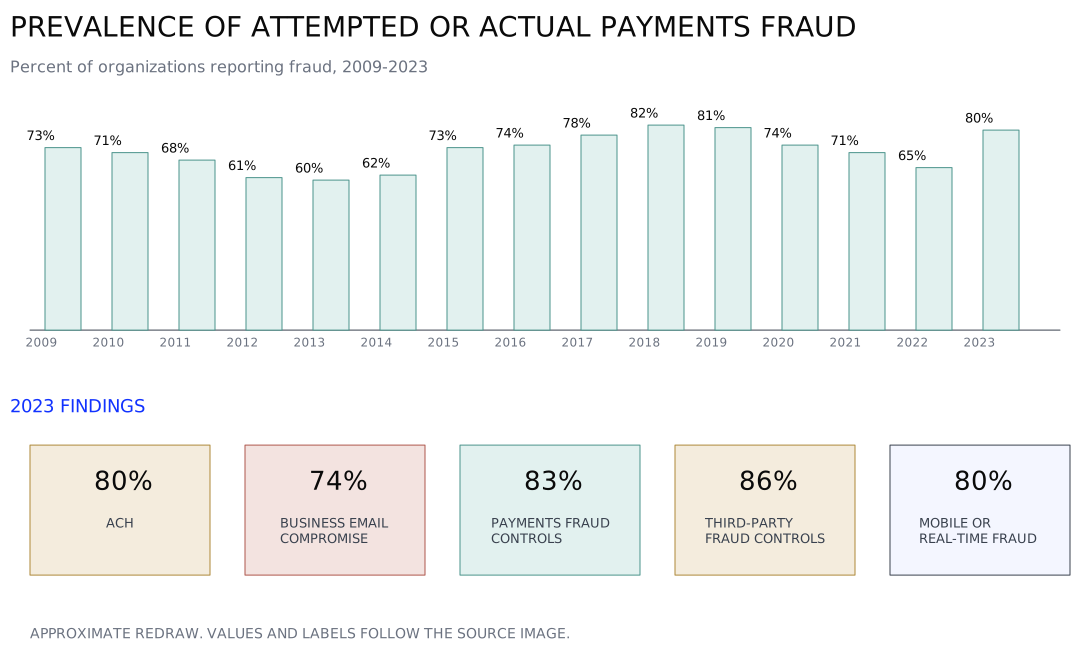
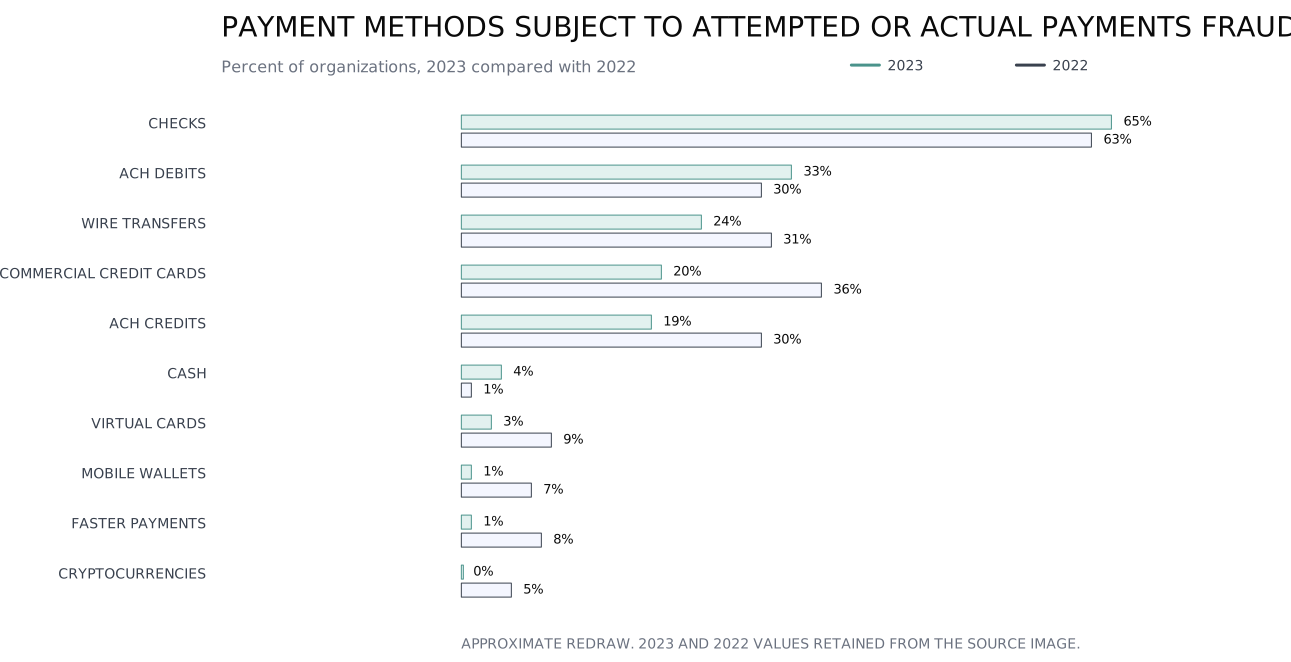
- Card-on-File (CoF): CoF transactions, while offering faster authorization than ACH posting, face their own set of challenges, primarily centered around involuntary churn. Recurring card payments frequently fail due to expired cards, cancelled cards (lost/stolen), issuer declines (e.g., suspected fraud, credit limit reached), or outdated card information. This involuntary churn forces merchants to invest in costly card-updater services, yet failures still occur, leading directly to lost subscription revenue (potentially 9% of revenue lost to failed payments), customer attrition (involuntary churn causes up to 48% of all churn for some subscription businesses), and added operational burdens for managing payment exceptions and customer outreach. It's estimated that involuntary churn could cost the subscription industry over $129 billion globally by 2025. Card payments generally carry higher transaction costs for the payee in the form of interchange fees compared to ACH, impacting profitability, especially for high-volume or lower-margin businesses. Authorization failures, even with valid card details, can also disrupt service and require intervention.
- Payer Experience Issues: From the payer's perspective, both dominant methods often fall short in terms of transparency and control. ACH Debits, once authorized, typically occur with little direct interaction or pre-notification for each specific transaction, potentially leading to unexpected overdrafts if funds are insufficient. Managing or cancelling recurring authorizations can sometimes be cumbersome. Similarly, while CoF setup might be convenient initially, managing multiple stored cards across various merchants and tracking upcoming charges can be challenging. The opaqueness of error resolution processes and the financial sting of late fees and NSF fees contribute significantly to consumer dissatisfaction and financial stress.
- Payee Operational Burdens: Beyond direct transaction costs and failure rates, payees grapple with substantial indirect operational overhead. Managing payment exceptions (NSFs, declines), reconciling payments (especially when remittance data is limited), handling customer service inquiries related to payment failures or confusion, and managing collections processes all consume significant resources. These operational complexities detract from core business activities and add hidden costs to accepting recurring payments.
2.3 Demand for something better
The confluence of factors - the sheer scale of recurring payments (evidenced by the $10.96 trillion in ACH consumer debits alone), the significant economic impact of failures and fees, and the persistent, well-documented pain points associated with both ACH Debit and CoF - creates a powerful market demand for superior solutions. The limitations of legacy systems represent not just inconveniences but substantial economic inefficiencies and sources of friction for both consumers and businesses.
This demand is amplified by broader societal and technological trends. Consumers, increasingly accustomed to real-time experiences in communication, commerce, and information access, have growing expectations for immediacy and control in their financial lives. The digitalization of commerce and finance necessitates payment methods that are not only efficient but also data-rich and adaptable. The inherent drawbacks of traditional batch-processed debits and failure-prone card systems stand in increasingly stark contrast to these evolving expectations, paving the way for innovation centered on real-time payment infrastructure.
The enduring dominance of ACH, despite its inherent flaws like settlement finality, fraud risk, and “operating hours,” strongly suggests that cost remains a primary consideration for many billers selecting a recurring payment method. ACH's very low per-transaction fee has historically outweighed its operational drawbacks for numerous use cases. This implies that for RTRP solutions to effectively displace ACH, particularly in cost-sensitive sectors, the value proposition must extend beyond speed and features. A compelling argument based on total cost of ownership (TCO) will be necessary. This TCO calculation must encompass not only the direct transaction fee but also the quantifiable savings derived from reduced NSF returns, lower exception handling costs, minimized collection activities, and the financial benefits of improved cash flow predictability. Only by demonstrating a lower overall economic burden can RTRP be monetized effectively while also challenging ACH's entrenched position.
Interestingly, the continued coexistence of ACH and CoF, each serving significant portions of the recurring payment market despite possessing distinct disadvantages (ACH: fraud/NSF/latency, Card: expiry/declines/cost), points towards a segmented market. Different industries, business models, and consumer preferences appear to favor one method over the other. For instance, subscription services often prioritize the convenience of CoF for customer acquisition, while large, fixed payments like mortgages may favor the perceived stability and lower cost of ACH. This segmentation suggests that RTRP may not succeed as a monolithic replacement for both - at least to start. Instead, its adoption trajectory might depend on its flexibility to address the specific needs currently met by both legacy systems. Implementations, particularly those involving Request for Pay (RfP), might need to cater to the convenience factor sometimes associated with cards (e.g., easy setup, user-friendly approval) while also delivering the reliability and potential cost advantages needed to compete with ACH. This could lead to varied RTRP adoption patterns across different market verticals.
An additional consideration arises from the significant revenue generated by fees associated with payment failures. The over $5.8 billion in annual overdraft and NSF fees reported in 2023 represents a substantial cost to consumers but also constitutes a revenue stream for financial institutions (primarily through overdraft/NSF fees) and potentially some billers (through late fees). RTRP systems, especially when utilizing RfP to enhance payer control and visibility, are explicitly designed to reduce the incidence of such payment failures. Consequently, widespread RTRP adoption carries the potential to disrupt these existing fee-based revenue models. This dynamic could create underlying friction or subtle resistance to aggressive RTRP promotion within certain segments of the financial industry that rely on this income, influencing investment priorities and the pace of adoption.
Table 2: Comparative analysis of U.S. recurring payment methods
| Feature/Attribute | ACH Debit | Card-on-File (CoF) | Check (Manual/Recurring) |
|---|---|---|---|
| Typical Cost (Payee) | Very Low (e.g., cents for Fed ACH) | Moderate to High (Interchange % + fees) | Moderate (Processing, handling costs) |
| Speed/Settlement Time | Slow (3+ business days, batch) | Fast Authorization, Settlement 1-3 days | Very Slow (Mail + processing time) |
| Payment Finality | Low (Revocable for NSF, errors, etc.) | Moderate (Chargebacks possible) | Moderate (Stop payments possible) |
| Data Transmission Capacity | Limited (Basic addenda records) | Limited (Basic transaction details) | Very Limited (Memo line) |
| Primary Failure Modes | NSF, Invalid Account, Authorization/Fraud Issues | Expiry, Cancellation, Declines, Limits | NSF, Stop Payment, Lost/Delayed Mail |
| Payer Control/Transparency | Low (Post-authorization debits) | Moderate (Visibility via card statements) | High (Manual initiation/mailing) |
| Payee Reconciliation Effort | Moderate to High (Limited data, exceptions) | Moderate (Standardized reporting) | High (Manual matching, deposit delays) |
| Typical Use Cases | Mortgages, Loans, Utilities, Payroll | Subscriptions, E-commerce, Memberships | Rent, Small Business Payments (declining) |
Author's note: This table provides a generalized comparison; specific attributes can vary based on agreements and service providers.
This comparative analysis underscores the trade-offs inherent in existing recurring payment methods. ACH excels on cost but falters on speed, finality, and data. Cards offer convenience but introduce churn and higher costs. Checks remain cumbersome and slow. This landscape clearly illustrates the gaps and pain points that create a compelling opportunity for a solution like RTRP, which aims to combine speed, finality, data richness, and enhanced control.
3. Defining real-time recurring payments (RTRP)
3.1 Core concept and mechanics
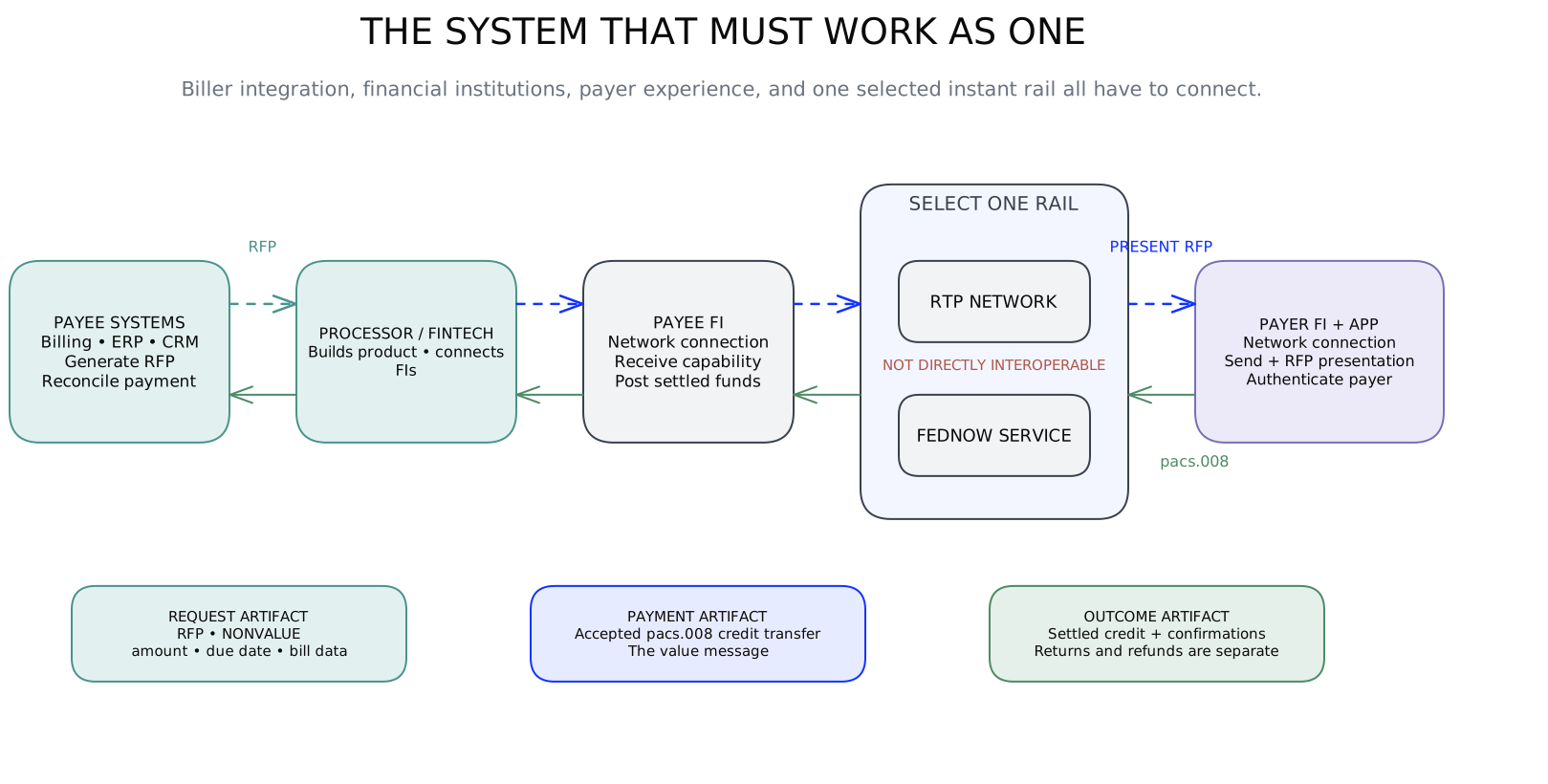
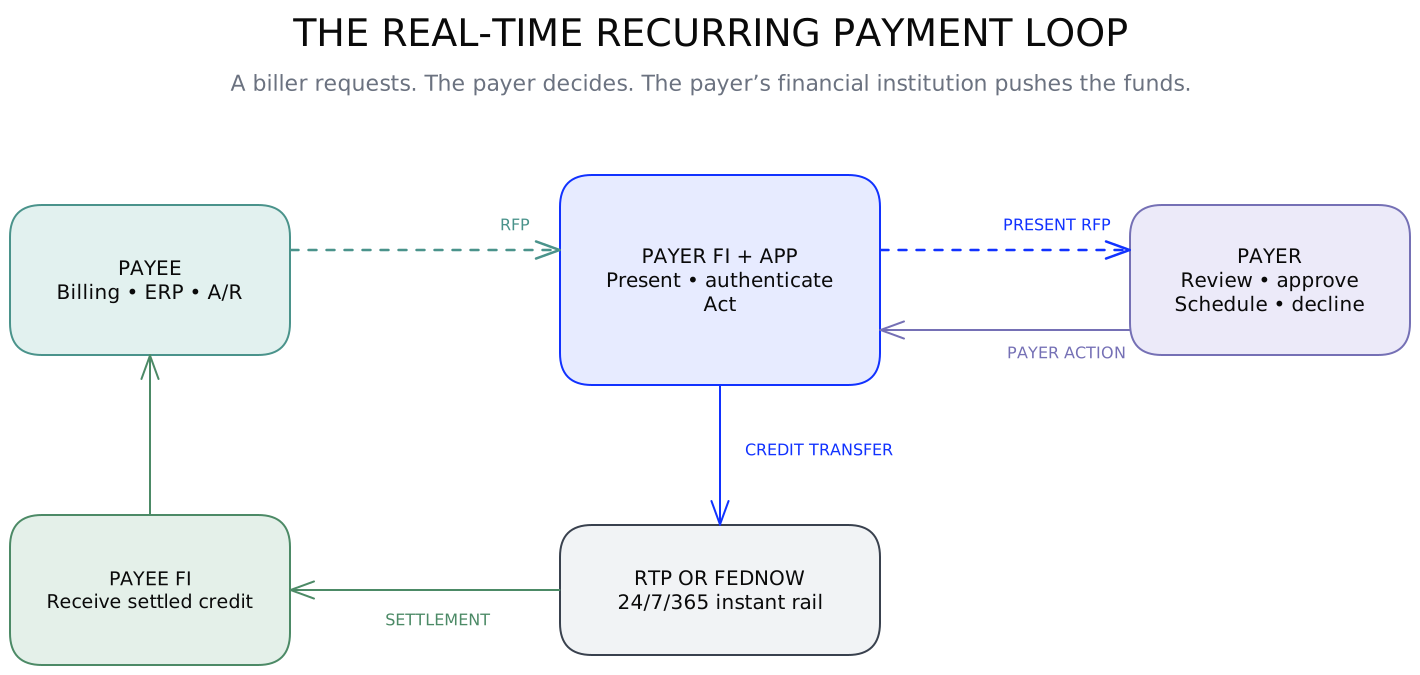
Real-Time Recurring Payments (RTRP) represent a paradigm shift from traditional recurring payment methods by leveraging modern, instant payment infrastructure. At its core, RTRP utilizes real-time payment rails - specifically, The Clearing House's RTP network and the Federal Reserve's FedNow Service - to execute and settle recurring payment obligations instantly or near-instantly, typically within seconds, 24 hours a day, 7 days a week, 365 days a year. A fundamental element enabling many anticipated RTRP use cases, particularly those involving variable payment amounts, requiring payer interaction before funds movement, or aiming to enhance payer control, is the RfP message functionality. RfP operates as a distinct message flow preceding the actual payment:
- Initiation: A payee (biller, merchant, service provider) sends an RfP message through the real-time network to the payer's designated financial institution or payment application. This message contains critical details such as the payment amount, due date, payer and payee information, and often includes supplementary data like an invoice number or bill summary.
- Presentation & Review: The payer receives a notification (e.g., via their mobile banking app or online portal) presenting the RfP details. The payer can review the requested amount, due date, and associated information.
- Authorization: The payer explicitly approves or authorizes the payment request. This action signifies their consent for the specific transaction detailed in the RfP. They may also have options to schedule the payment for the due date or decline the request.
- Execution: Upon payer approval, a real-time payment message (a credit transfer) is initiated from the payer's account to the payee's account over the RTP or FedNow network.
- Settlement & Confirmation: The payment is cleared and settled between the involved financial institutions in real-time (typically seconds), and both payer and payee receive immediate confirmation of the completed transaction.
This RfP process fundamentally alters the dynamic compared to traditional ACH Debit or CoF models. Instead of a payee "pulling" funds based on a standing authorization, the payee "requests" payment, and the payer actively "pushes" the funds after reviewing and approving the specific request. This shift places significantly more control and transparency in the hands of the payer.
While RfP is central to the enhanced control narrative, alternative RTRP models could also emerge. For example, payers might establish standing instructions with their financial institution to automatically approve and initiate real-time credit transfers for specific payees up to certain limits or for fixed amounts on set dates, effectively creating a pre-authorized real-time push payment. However, the RfP model is widely seen as the key enabler for addressing the core pain points of unexpected debits and lack of transparency associated with legacy systems, especially for variable bills.
3.2 Underlying infrastructure: RTP network and FedNow Service
The feasibility and effectiveness of RTRP are entirely dependent on the capabilities of the underlying real-time payment rails:
- RTP Network: Launched by The Clearing House (TCH) in 2017, the RTP network provides payment processing capabilities enabling financial institutions to clear and settle payments instantaneously, 24/7/365. It was the first new core payments infrastructure introduced in the U.S. in decades. TCH is owned by a consortium of large U.S. banks. As of late 2024/early 2025, over 675 FIs participated, with true reach estimated around 65-70% of U.S. DDAs. The network processed 343 million transactions valued at $246 billion in 2024. The standard transaction limit was $1 million, increasing to $10 million effective February 9, 2025.
- FedNow Service: Launched by the Federal Reserve in July 2023, the FedNow Service offers similar capabilities for instant payments, operating around the clock and providing real-time settlement. Its introduction aims to promote nationwide access to instant payments and foster competition and innovation. By late 2024, over 1,000 financial institutions were participating. The default transaction limit is $100,000, which FIs can raise up to $500,000, with plans announced to allow increases up to $1 million.
Both networks share critical characteristics essential for RTRP:
- Continuous Operation: 24/7/365 availability ensures payments can be requested, approved, and settled at any time, irrespective of traditional banking hours or holidays.
- Instant Clearing and Settlement: Payment messages are processed, and final settlement between participating financial institutions occurs within seconds. This provides immediate funds availability to the payee and certainty for both parties once executed.
- Modern Data Capabilities: Both networks are built using the ISO 20022 messaging standard. This modern standard allows for significantly richer data, such as detailed remittance information, invoice numbers, and other contextual details, to be carried alongside the payment instruction. This capability is crucial for streamlining reconciliation processes for businesses.
The ultimate success and reach of RTRP depend heavily on broad participation by financial institutions across the U.S. on one or both of these networks. Widespread FI adoption is necessary to ensure that payers and payees can seamlessly connect and transact in real-time, regardless of where they bank. Interoperability or mechanisms allowing transactions to flow between participants on different networks remains a future goal, as the networks are not currently directly interoperable.
3.3 Key differentiators from traditional methods
RTRP offers several fundamental advantages over traditional ACH Debit and CoF recurring payments:
- Speed and Finality: This is the most defining characteristic. Payments are completed and irrevocably settled within seconds. This immediate availability of funds drastically improves cash flow for payees and provides absolute certainty of payment for both parties once executed. This contrasts sharply with ACH's multi-day settlement cycle and the inherent risk of returns.
- Payer Control and Transparency: RfP-based RTRP models empower payers by requiring their explicit approval for each payment instance (or based on pre-agreed parameters), allowing them to verify the amount and timing before funds are moved. This directly addresses major consumer frustrations with unexpected debits, overdraft fees, and the perceived lack of control in traditional debit arrangements.
- Data Richness: The use of ISO 20022 messages enables the transmission of extensive remittance information alongside the payment. Payees can receive detailed data (e.g., invoice numbers, customer account codes, bill period) directly linked to the payment, significantly simplifying and automating account reconciliation, reducing manual effort and potential errors. This is a substantial improvement over the limited data fields available in legacy ACH formats or card transaction messages.
- Predictability: For payees, the combination of RfP confirmation and real-time settlement enhances cash flow forecasting and management. They gain greater certainty about incoming funds. For payers using RfP, there is clear visibility into upcoming payment obligations presented for approval, allowing for better personal financial planning and reducing the likelihood of payment failures due to insufficient funds.
The reliance on RfP within nearly all RTRP models represents more than just a technical feature; it signifies a fundamental shift in the recurring payment interaction model. Traditional methods predominantly operate on a "pull" basis, where the payer grants upfront permission for the payee to initiate debits (ACH Debit) or charges (CoF) against their account. In contrast, the RfP model introduces a "request-approve-push" sequence. The payee initiates a request, but the critical action shifts to the payer, who must actively review and authorize the payment, typically via their own trusted banking interface (mobile app or online portal). This transfer of the initiation trigger to the payer has profound implications. It necessitates changes in how billers onboard customers for recurring payments - shifting from collecting account/card details for debiting to establishing consent and a pathway for delivering RfPs. Crucially, it assumes an elevation in importance of the payer's digital banking experience. Banks and credit unions must provide intuitive, reliable, and secure interfaces for receiving, managing, and approving RfPs, as this interface becomes the primary interaction point for the payment itself. The success of RfP-based RTRP adoption will be heavily influenced by the quality and usability of these payer-facing applications until more streamlined interactions emerge.
While the enhanced data capabilities offered by ISO 20022 on the RTP and FedNow networks present a notable advantage for reconciliation, realizing the full potential of this data richness hinges on achieving ecosystem-wide consistency. The standard itself provides a structure, but the specific ways in which data fields (e.g., invoice numbers, customer identifiers, remittance details within an RfP or payment message) are populated can vary significantly between different billers or industries. If a receiving payee's accounting or ERP system cannot automatically parse and utilize this information due to inconsistent formatting or data mapping challenges, the promised reconciliation benefits will be diluted, potentially still requiring manual intervention or complex integration efforts. Therefore, unlocking the true value of RTRP's data capabilities requires collaborative efforts, potentially guided by organizations like the FPC, to establish clear implementation guidelines, best practices, and perhaps even standardized data content templates within the ISO 20022 messages used for RfP and related payments. Such standardization is essential for enabling straight-through processing and maximizing operational efficiencies for payees.
The presence of two distinct national real-time payment infrastructures, RTP and FedNow, presents both opportunities and challenges for RTRP deployment in the U.S. On one hand, having two networks can accelerate overall reach and provide choice and resiliency for the market. On the other hand, it introduces potential fragmentation, as the networks are not currently interoperable. For RTRP, particularly using RfP, to become truly ubiquitous, a biller ideally needs the ability to send an RfP and receive the subsequent payment seamlessly, regardless of which network the payer's financial institution utilizes. This necessitates either broad participation by financial institutions on both networks or the development of effective interoperability solutions, directory services, or overlay services that can bridge the two ecosystems. The strategic decisions made by individual financial institutions regarding which network(s) to connect to and support will directly impact the effective reach and user experience of RTRP services in the near to medium term, adding a layer of complexity compared to markets with a single dominant real-time rail.
4. Sizing the U.S. market opportunity for RTRP
4.1 Total addressable volume (TAV) estimation
The potential market for Real-Time Recurring Payments in the United States is exceptionally large, although defining a single, precise TAM figure is complex due to varying definitions and data availability across payment types (ACH, card, check) and segments (consumer, B2B). However, key indicators illustrate the scale:
- ACH Consumer Debits: The ACH Network processed $10.96 trillion in "Consumer Bill Payments and Other Debits" in 2024. While not exclusively recurring, this figure demonstrates the massive value flowing through consumer-initiated debits where recurring payments are common.
- Overall ACH: The entire ACH network processed $86.2 trillion in 2024.
- Card Payments: Combined Visa and Mastercard purchase volume in the U.S. was $9.367 trillion in 2024. Visa alone processed $13.2 trillion in total payments volume globally in its fiscal 2024.
- B2B Payments: Estimates for the U.S. B2B recurring payments market vary widely, but applying a very conservative 10% recurring modifier to the ~$58.24 trillion in 2024 ACH originations presents a sizeable opportunity. Regardless of the exact figure, B2B represents a substantial additional opportunity beyond consumer payments.
Given these figures, the total value of payments potentially addressable by RTRP (including consumer recurring bills, subscriptions, B2B recurring invoices, etc.) clearly runs into the tens of trillions of dollars annually. This vast scale signifies a massive opportunity for RTRP solutions to capture market share from incumbent methods.
However, this initial estimate requires refinement to gauge the realistically addressable market in the near-to-medium term. Certain payment types within these totals might exhibit slower adoption dynamics. For example, large, long-term contractual payments like mortgages, while technically feasible over RTRP, may remain entrenched in existing ACH processes due to established servicing platforms and consumer habits. Conversely, categories like utilities, telecommunications bills, insurance premiums, subscription fees, rent payments, and various loan installments represent a significant portion of recurring volume highly amenable to the benefits offered by RTRP, particularly the enhanced control via RfP and reduced failure rates. Yet, focusing solely on consumer bill payment statistics significantly understates the total potential scope for RTRP. The Business-to-Business (B2B) sector represents another substantial market where recurring payments are prevalent. Use cases such as recurring software licenses (SaaS), ongoing service contracts, franchise fees, regular supplier payments, and intra-company transfers could greatly benefit from the speed, data richness, and improved cash flow predictability offered by RTRP. The infrastructure and capabilities developed for consumer RTRP, especially RfP and ISO 20022 data handling, are directly applicable and potentially even more valuable in a B2B context where reconciliation complexities are often greater. Therefore, a comprehensive view of the RTRP opportunity must encompass both consumer and business recurring payment flows.
4.2 Subscription services: Digital, physical, and hybrid
- Market Context: The subscription economy represents a massive and rapidly growing market segment in the U.S., valued at approximately $207.7 billion in 2024 and projected to grow at a CAGR of 11.8% through 2034. E-commerce subscriptions alone were estimated to be an $18.8 billion market in 2024. This vertical inherently relies on efficient and reliable recurring payment mechanisms.
- Current Methods: Payments are predominantly processed via credit and debit cards. While ACH is used, its slower speed can be a drawback. Internationally, platforms like India's UPI AutoPay have gained significant traction.
- Pain Points: The most acute pain point is the extremely high failure rate associated with recurring card payments, estimated between 9-15% or even higher. These failures, often due to expired cards, credit limits, or generic declines, are a primary driver of involuntary customer churn (estimated at 20-50% of total churn), leading to substantial revenue loss and impacting customer lifetime value. Managing declined payments through dunning and retry processes adds significant administrative overhead. Storing card data for recurring billing also raises security concerns and PCI compliance burdens, although network tokenization and other technologies have proved to be effective. Subscription abuse and fraud are also challenges.
- RTP Use Case: The primary use case is employing RfP with standing authorization for collecting periodic subscription fees. The potential benefits are substantial: a significant reduction in payment failures by bypassing common card-related issues (expiration, limits), potentially lower transaction costs compared to card processing fees, improved cash flow predictability for merchants, and an enhanced customer experience due to fewer payment disruptions. The concept of Variable Recurring Payments (VRPs) is also emerging as a future enhancement for more flexible subscription models.
- Readiness & Incentives: Subscription businesses, particularly digital natives, generally possess high technological readiness. The economic incentive to adopt real-time recurring payments is exceptionally strong, driven directly by the high costs associated with card failures and churn. Average churn rates in the subscription industry (e.g., 4.1% monthly overall, 5-7% annual for SaaS) highlight the sensitivity to retention, making solutions that reduce involuntary churn highly attractive. Payment processing cost benchmarks further emphasize the potential savings compared to card fees.
- Assessment: The subscription vertical represents the highest immediate potential for real-time recurring payments. The severe economic consequences of card payment failures and associated churn create a compelling business case for adopting A2A real-time solutions via RfP. The potential for significantly lower failure rates, coupled with potentially lower transaction costs compared to cards, directly addresses the most critical payment challenge faced by this industry. The expected ROI from reduced churn and operational savings likely justifies the investment needed to implement real-time solutions.
4.3 Utilities and telecommunications
- Market Context: This sector generates a massive volume of recurring monthly bills, constituting a large portion (43%) of all U.S. bills paid monthly. Customer payment behaviors are diverse.
- Current Methods: A mix of methods is prevalent. ACH/Direct Debit is a preferred method for many one-time payments (~35%) and likely significant for recurring setups. Biller websites and bank bill pay portals (popular among older demographics) are common channels. Postal mail and checks remain surprisingly persistent, especially among consumers aged 55+. Card payments are used, but perhaps less dominant than in subscriptions. There is growing interest in digital and mobile payment options, although a 2020 study indicated relatively low adoption (22%) of recurring auto-pay set up directly via utility/telecom provider portals.
- Pain Points: Managing the complexity of diverse payment methods and channels is a challenge. Processing paper checks and mail incurs costs and delays. Delayed fund settlement impacts cash flow predictability. Customers sometimes find bills confusing, and late payments can lead to service disruptions. Encouraging adoption of digital, automated payments, particularly among less tech-savvy demographics, remains an ongoing effort.
- RTP Use Case: RfP can be used to present monthly bills and request payment. For variable bills (common in utilities), the RfP mechanism needs to support flexible amounts. Real-time payment confirmation offers immediate assurance to customers, potentially reducing inquiries. Faster settlement improves cash flow for billers. The rich remittance data embedded in ISO 20022 messages can streamline reconciliation. A superior user experience might encourage higher adoption of automated recurring payments compared to traditional methods.
- Readiness & Incentives: Readiness is mixed. Large providers likely have sophisticated systems but may face integration hurdles with legacy infrastructure. Smaller municipal utilities might lack resources. Customer readiness and preference vary significantly by age and digital literacy. The economic incentive exists (faster funds, lower processing costs vs. checks), but may be less acute than in the subscription sector if existing ACH methods are perceived as adequate.
- Assessment: Utilities and Telecommunications offer significant volume potential due to the essential nature of their services. However, adoption of real-time recurring payments hinges critically on delivering a demonstrably superior user experience compared to entrenched, low-cost methods like ACH debit and bank bill pay. Effectively communicating the benefits (e.g., speed, instant confirmation) is necessary to overcome customer inertia and diverse preferences. Handling variable bill amounts seamlessly within the RfP flow and providing an easy, trustworthy process for setting up standing authorizations are key challenges that must be addressed for widespread adoption. The potential is moderate but requires significant focus on UX and customer education.
4.4 Financial services: Insurance, lending, and investments
- Market Context: This sector involves regular, often high-value, recurring payments such as insurance premiums, loan and mortgage installments, and potentially investment contributions.
- Current Methods: ACH debit is common for loan payments and insurance premiums. Checks are still used but declining. Debit cards are utilized but perhaps less frequently than for consumer subscriptions.
- Pain Points: Managing payment exceptions and delinquencies is crucial for portfolio performance (lending) and maintaining coverage (insurance). Check fraud remains a concern. There is a strong drive for operational improvement and reducing back-office friction. Customers increasingly demand faster, digital payment options and quicker access to funds (e.g., insurance claim payouts).
- RTP Use Case: RfP is suitable for collecting insurance premiums, loan repayments, and recurring investment deposits. Real-time settlement provides payment certainty for lenders and insurers. A key advantage lies in using real-time rails for outbound payments as well, such as instant insurance claim settlements or loan disbursements, which can significantly enhance customer satisfaction and loyalty. Real-time A2A transfers can also facilitate instant account funding for investment or brokerage accounts. Variable Recurring Payments (VRPs) could offer additional flexibility, particularly for investing where amounts may vary.
- Readiness & Incentives: Readiness is generally high, as FIs are the primary participants and enablers of the RTP and FedNow networks. Insurance companies and lending platforms are also increasingly digitized. Regulatory compliance is paramount. The incentive is strong, driven by streamlined operations, improved risk management (payment certainty), enhanced customer experience through faster payouts, and competitive pressure to offer modern payment options.
- Assessment: The Financial Services vertical holds strong potential for real-time recurring payments. Its unique position as both a major collector and sender of payments makes real-time capabilities particularly strategic. FIs can leverage RfP for inbound recurring collections (premiums, loans) while simultaneously using real-time credit push for outbound payments (claims, disbursements). This dual applicability, combined with the direct involvement and technical capability of FIs themselves, positions the sector as a likely early adopter and key driver of innovation in real-time payments, including recurring functionalities.
4.5 Healthcare services
- Market Context: Healthcare billing is notoriously complex, involving interactions between patients, providers, and payers. Patient financial responsibility has been steadily increasing due to high-deductible health plans, leading to significant challenges with affordability and medical debt.
- Current Methods: Payments involve a mix of insurance reimbursements and direct patient payments. Patient payments are often made via traditional methods like mail/check (significant portion of one-time payments) or through provider websites/portals, where cards are common. ACH is used, particularly for existing recurring payment plans. However, provider-initiated recurring payment plan adoption has historically been relatively low. There is growing patient interest in digital options, mobile apps, and payment plans to manage costs.
- Pain Points: Widespread patient confusion over medical bills and lack of price transparency are major issues. High healthcare costs lead to affordability problems, resulting in delayed or missed payments and patients foregoing care. Providers face significant challenges in collecting patient responsibility portions. The administrative burden of managing complex billing, collections, denials, and reconciliation is substantial. Seamless integration between billing systems and Electronic Health Records (EHRs) is often lacking.
- RTP Use Case: RfP could facilitate the setup and management of patient payment plans, breaking down large, unexpected medical bills into more manageable recurring installments. This could offer a more streamlined process than manual plan setup. Real-time payment confirmation provides clarity. Integration with patient portals could improve accessibility. Real-time payments could also be applied to B2B healthcare transactions (e.g., provider-supplier) and potentially expedite payer-to-provider claim settlements.
- Readiness & Incentives: Readiness varies. Large health systems are investing in advanced billing technology, including automation and AI, but integration remains complex. Smaller practices may lack resources. Patient financial literacy and digital access are inconsistent. HIPAA compliance for payment data is critical. The incentive for providers is clear (improved collections, reduced bad debt), but patient adoption depends heavily on enabling technology.
- Assessment: Real-time recurring payments, particularly through RfP-enabled payment plans, offer a potential mechanism to improve patient collections and streamline billing operations in healthcare. However, the effectiveness of this technology is intrinsically linked to addressing the sector's fundamental challenges: affordability, price transparency, and bill clarity. Simply providing a more efficient way to request payment will have limited impact if patients fundamentally cannot afford the bill or don't understand what they owe. Therefore, real-time payments in healthcare are best viewed as an enabling tool within a broader strategy focused on improving financial navigation and affordability for patients. The potential is moderate and highly dependent on solving these underlying issues.
4.6 Property management
- Market Context: The core recurring payment in this vertical is monthly rent collection. The industry is increasingly adopting property management software to streamline operations.
- Current Methods: There's a clear shift towards digital rent collection. Online portals and property management software facilitate payments via ACH or debit cards. However, traditional methods like checks and mail still exist. Tenants increasingly expect multiple convenient payment options.
- Pain Points: Late or missed rent payments are a primary concern, disrupting cash flow for landlords and property managers and requiring time-consuming collection efforts. Managing different payment methods adds complexity. Ensuring payment security is crucial.
- RTP Use Case: RfP provides a mechanism for requesting monthly rent payments. The key benefit for landlords/managers is the potential for significantly faster settlement of funds compared to ACH, improving cash flow visibility and predictability. Real-time confirmation offers tenants proof of payment. When combined with automated reminders and an easy approval flow (potentially via standing authorization), RfP could help reduce the incidence of late payments due to forgetfulness or processing delays. Seamless integration with existing property management software platforms is critical for adoption.
- Readiness & Incentives: Technological readiness is increasing with the adoption of PropTech solutions. Tenant demand for digital convenience is high. The economic incentive for landlords and property managers is strong: faster access to funds reduces cash flow gaps, and reducing late payments saves time and administrative costs.
- Assessment: Property management exhibits strong potential for adopting real-time recurring rent payments via RfP. The clear value proposition of faster funds availability for property owners/managers and payment certainty/convenience for tenants aligns well with the core needs of the vertical. Success hinges significantly on the ability of property management software providers to seamlessly integrate RTP and FedNow RfP capabilities into their platforms, automating the request and reconciliation process and providing a unified, user-friendly experience for both tenants and managers.
Table 3: Vertical market analysis
| Vertical Market | Payment Volume/Value | Dominant Current Methods | Pain Points Today | Technological Readiness | Economic Incentive for RTP | Estimated Adoption Potential |
|---|---|---|---|---|---|---|
| Subscription Services | High Volume / Low-Med Value | Cards (Credit/Debit), ACH | Very High Card Failures/Churn (15-50%+), High Card Costs | High | Very High | High |
| Utilities & Telecom | Very High Volume / Med Value | ACH, Bank Bill Pay, Biller Website, Mail/Check | ACH Delay, Check Cost/Delay, Diverse Preferences, Bill Clarity | Medium | Medium | Medium |
| Financial Services (Ins/Lend) | Med-High Volume / High Value | ACH Debit, Checks | Payment Exceptions, Check Fraud, Slow Payouts | High | High | High |
| Healthcare Services | Med Volume / Variable Value | Mail/Check, Provider Portal (Cards), ACH Plans | Affordability, Bill Confusion, Collection Difficulty | Medium | Medium (Provider) | Medium (Tied to Affordability) |
| Property Management | High Volume / High Value | ACH, Cards (via Software), Checks | Late Payments, Slow Funds (ACH), Collection Effort | High | High | High (Integration Key) |
5. Financial inclusion and underserved segments
While real-time payments offer potential benefits for the broader economy, their impact on financial inclusion and the ability to serve unbanked, underbanked, and credit-invisible populations requires specific examination. These segments face unique challenges in accessing and utilizing traditional financial services, including recurring payment mechanisms.
5.1 Market quantification
Understanding the scale and characteristics of underserved populations is crucial:
- Unbanked: Households lacking a checking or savings account at a bank or credit union. In 2023, this represented 4.2% of U.S. households (approx. 5.6 million), a historic low but still substantial. Unbanked rates remain disproportionately high among Black (10.6%), Hispanic (9.5%), and American Indian/Alaska Native (12.2%) households, as well as lower-income, less-educated, disabled, and single-parent households.
- Underbanked: Households with a bank account but who also rely on alternative financial services (e.g., check cashers, payday loans). In 2023, 14.2% of U.S. households (approx. 19.0 million) were underbanked. The Financial Health Network (FHN) also conducts research segmenting this population based on financial behaviors and attitudes.
- Credit Invisible/Thin-File: Individuals with no credit history or insufficient recent history to generate a credit score with the major bureaus. A 2015 CFPB report estimated 26 million U.S. adults (1 in 10) fell into this category, with higher prevalence among Black, Hispanic, and low-income consumers. A key contributing factor is that many regular payments, such as rent and utilities, are often not reported to credit bureaus, rendering positive payment history invisible. The FDIC noted 15.7% of households lacked access to mainstream credit in 2023.
- Banking Deserts: Communities lacking physical bank branches (affecting ~8 million people) or reliable broadband access for online banking (affecting ~15 million people), which negatively impacts financial health and access to services.
5.2 Challenges and opportunities
Underserved segments face significant hurdles, particularly with managing payments, including recurring ones:
- Current Payment Hurdles: The unbanked rely heavily on cash (two-thirds rely entirely on cash), prepaid cards, and nonbank online payment services (used by about a third of unbanked households). They frequently use nonbank money orders and check-cashing services for essential transactions like paying bills and receiving income. These methods can be expensive due to fees, inconvenient (requiring physical travel), time-consuming, and crucially, do not contribute to building a formal credit history. Lack of access to mainstream credit further limits economic opportunities and resilience. Setting up and managing recurring payments without a stable bank account or consistent digital access is extremely difficult.
- Real-Time Payment Potential: Since RTP and FedNow are account-to-account systems, they inherently require users to have a bank account. This limits their direct applicability for the currently unbanked population. However, for the underbanked (who have accounts) and the credit invisible (who could gain accounts), real-time payments offer potential benefits if integrated appropriately:
- Faster Funds Access: Real-time receipt of wages, government benefits, or gig economy payouts eliminates delays and fees associated with check cashing, providing immediate access to needed funds.
- Improved Bill Pay: Using RfP through a connected bank account could offer a more controlled, transparent, and potentially cheaper way to pay recurring bills compared to money orders or mail, possibly helping to avoid late fees.
- Lower Costs: If offered via low-fee bank accounts (like Bank On certified accounts), real-time transactions could be significantly cheaper than alternative financial services used by the underbanked.
- Foundation for Inclusion: Providing access to basic, efficient digital payments can serve as an entry point to the formal financial system, potentially leading to savings and credit-building opportunities.
- Credit Building Potential: Growing adoption of cash-flow-based underwriting via open-banking data may enable bureau reporting on-time payments made via real-time rails for recurring expenses like rent or utilities (potentially initiated via RfP), this could help credit-invisible individuals build a formal credit history. This requires specific reporting mechanisms beyond the payment rails themselves.
- Small Business Support: Real-time payments can benefit underserved entrepreneurs and micro-businesses by enabling instant receipt of payment for goods and services.
- Solutions and Considerations: Realizing the financial inclusion potential of real-time payments requires an intentional approach. Key elements include promoting the availability and adoption of safe, affordable, low-fee transaction accounts enabled for RTP/FedNow. Developing accessible "cash-in" ramps or networks is necessary for cash-reliant individuals to fund these digital accounts. Partnerships between FIs, fintechs, and community development organizations are needed to deliver tailored solutions and financial education. Ensuring solutions are mobile-first is critical, as smartphones are often the primary digital access point for these populations. Addressing the digital divide and lack of reliable internet access in banking deserts is also essential.
Ultimately, real-time payments are not a silver bullet for financial inclusion. Their effectiveness in serving unbanked and underbanked populations is highly dependent on the existence of an accessible and affordable ecosystem around the payment rails themselves. Without low-cost accounts, convenient ways to load funds, and potentially new mechanisms for leveraging payment data for credit building, the direct benefits for the most financially vulnerable may remain limited.
Despite obvious benefits, the broader trend towards digital and real-time payments carries a risk. If the transition happens rapidly without adequate on-ramps and support for cash-preferred or digitally excluded populations (e.g., those in banking deserts, older or less educated individuals), the shift could inadvertently exacerbate existing financial inequalities, making it harder for these groups to participate fully in the economy. Ensuring inclusive design and deployment is therefore critical.
Table 4: Underserved segment profile and real-time payment potential
| Segment | Estimated U.S. Size (Households/Adults) | Key Characteristics | Existing Recurring Payment Challenges | Potential Real-Time Payment Benefits | Key Enablers |
|---|---|---|---|---|---|
| Unbanked | 4.2% HHs (~5.6M) | No bank account; Higher rates among minority, low-income, less-educated groups | Heavy reliance on cash, prepaid cards, costly AFS (money orders) | Indirect: Requires obtaining an account first. | Accessible, low-fee bank accounts; Cash-in ramps, Financial education. |
| Underbanked | 14.2% HHs (~19.0M) | Have bank account but use AFS frequently | High fees for AFS; Inconvenience; Potential distrust of banks. | Lower cost vs. AFS; Faster funds access; Convenient bill pay via RfP; Improved budgeting/control. | Affordable account features; Trust-building; User-friendly interfaces; Mobile accessibility. |
| Credit Invisible / Thin-File | ~26M Adults (CFPB 2015) / 15.7% HHs (FDIC 2023) | No/limited credit history; Regular payments (rent/utils) often unreported | Difficulty accessing mainstream credit; Inability to demonstrate creditworthiness. | Potential: Reporting on-time real-time payments (rent/utils via RfP) to build credit history; Faster access to alternative credit if available. | Development of reporting mechanisms for alternative data; Partnerships with credit bureaus/lenders; Consumer consent. |
6. Factors influencing market penetration
The pace and extent of RTRP adoption will be governed by several critical factors:
- Financial Institution (FI) Adoption: The number of FIs connected to the RTP and FedNow networks and, crucially, their readiness to support RfP message processing and presentment is paramount. Network effects are essential; RTRP only becomes truly valuable when a critical mass of both sending and receiving endpoints (DDAs) are enabled.
- Biller/Payee Integration: Businesses must be willing and able to invest in integrating RTRP and RfP capabilities into their existing billing, ERP, CRM, and treasury management systems. The complexity and cost of this integration will be a major determinant, especially for small and medium-sized businesses (SMBs). There may be the opportunity for key unlocks in the vertical SaaS market.
- User Experience: The development and adoption of intuitive, secure, and user-friendly payer interfaces - primarily within FI mobile banking apps but potentially via third-party providers - for managing RfPs (receiving notifications, reviewing details, approving or scheduling payments) is critical. A clunky or confusing experience will severely hinder consumer uptake.
- Relative Cost: The pricing of RTRP transactions (network fees: $0.045 per credit transfer on both, RfP fees: $0.11 RTP vs $0.01 FedNow, plus FI charges, solution provider costs) compared to the TCO of incumbent methods (namely cards) will heavily influence adoption decisions, particularly for cost-sensitive billers.
- Consumer Awareness and Behavior: Educating consumers about the benefits and mechanics of RTRP/RfP and encouraging a shift in behavior from passive debit authorization to active payment approval will require significant effort from FIs and billers.
The initial TAM estimates derived from consumer payment data likely represent only the lower bound of the true market potential. When the substantial volume of B2B recurring payments (e.g., software licenses, supplier contracts) and adjacent P2M use cases potentially enabled by the same RfP infrastructure are factored in, the overall opportunity expands significantly.
The core technology - real-time rails, RfP messaging, ISO 20022 data capabilities - is inherently suitable for business transactions, often offering even greater value in B2B scenarios due to higher payment values and more complex reconciliation needs. Therefore, the business case for investing in RTRP infrastructure becomes considerably stronger when viewed not just as a consumer bill pay solution, but as a versatile platform capable of supporting multiple payment flows across the economy. This suggests potential for synergistic growth as capabilities built for one segment are leveraged in others.
Market penetration is unlikely to be uniform across all segments. Adoption will likely occur in waves, driven by the relative intensity of existing pain points and the clarity of the RTRP value proposition in specific verticals. Use cases where current methods generate acute problems - such as industries plagued by high NSF rates and costly exception handling using ACH, or subscription businesses losing significant revenue to card churn - are prime candidates for early adoption. In these segments, the benefits of RTRP (e.g., reduced failures, improved cash flow, enhanced control) offer a clear and compelling return on investment. Conversely, segments where existing methods are perceived as "good enough," deeply integrated into legacy systems, or where the switching costs are particularly high (perhaps initial mortgage servicing), may see slower RTRP uptake. Understanding these segment-specific dynamics is crucial for forecasting adoption curves and developing targeted market strategies.
This segmentation highlights the diverse opportunities for RTRP. While consumer bill payments represent a massive category based on ACH data, high-pain segments like subscriptions and potentially gig economy payments may see faster initial adoption due to more acute needs. The vast B2B market represents a significant long-term opportunity, leveraging the core capabilities of RTRP for more complex business needs.
The introduction of RTRP, particularly via RfP, may fundamentally blur the traditional definition of "recurring" payments. The ease with which an RfP can be generated and sent for variable amounts and on flexible schedules makes the mechanism suitable not only for replacing pre-authorized fixed debits but also for managing variable recurring bills (like utilities or credit cards), prompting payment for one-off invoices (like medical bills or contractor services), or even facilitating payments at the point of sale or within an application. This implies that RTRP/RfP is not merely competing against ACH Debit and CoF for the existing automated recurring payment volume. It also has the potential to capture volume currently handled by manual online bill payments, paper checks, and potentially even displace card payments in various P2M contexts where a direct A2A transfer offers advantages. This broadens the competitive landscape and expands the ultimate addressable market considerably beyond the initial recurring payment focus.
7. High-impact use cases and stakeholder value proposition
7.1 Use-case exploration
The core capabilities of RTRP - speed, finality, data richness, and enhanced control via RfP - enable a range of high-impact use cases poised to deliver significant value:
- Intelligent Bill Pay: This is arguably the flagship use case today for RfP-based RTRP, particularly for bills with variable amounts (e.g., utilities, credit cards, mobile phone plans). Instead of authorizing a potentially unpredictable debit, the payer receives an RfP detailing the exact amount due and the due date. They can review this information within their banking app, select the desired payment date (up to the due date), choose the funding account, and explicitly authorize the payment. This process dramatically reduces the likelihood of missed payments or NSFs resulting from unexpected debit amounts. For the biller, it provides greater certainty of payment collection and reduces exception handling. The inclusion of rich bill data within the RfP and subsequent payment message streamlines reconciliation. This model transforms bill payment from a passive debit process to an interactive, controlled, and data-rich experience.
- Subscription Management: RTRP offers a potent solution to the costly problem of involuntary churn that plagues subscription businesses relying on CoF. By linking recurring payments directly to a customer's bank account via RTRP (either through RfP for each cycle or potentially pre-authorized real-time credits), merchants can bypass the issues of card expiration, cancellation, or issuer declines. This leads to more stable revenue streams, reduced customer attrition (potentially cutting involuntary churn significantly), and lower operational costs associated with failed payment recovery and card updating services. Depending on network and FI pricing strategies, RTRP could potentially offer lower transaction costs compared to card interchange fees, boosting margins. The explicit authorization trail provided by RfP can also aid in managing customer service and disputes.
- Rent and Loan Repayments: Applying RTRP/RfP to loan repayments (e.g., auto loans, personal loans, potentially mortgages in the future) offers benefits for both lenders and borrowers. Lenders can send an RfP ahead of the due date, prompting the borrower to confirm funds availability and authorize the payment. This proactive confirmation can reduce the incidence of late payments and defaults, lowering collection costs and credit losses. Borrowers gain better visibility into their upcoming obligations and receive immediate confirmation once the payment is successfully made, providing peace of mind. The enhanced data capabilities could also facilitate easier tracking of principal and interest components.
- B2B Payments: While consumer use cases often dominate discussions, RTRP holds immense potential for B2B transactions. Using RTRP/RfP for recurring payments like software licenses, equipment leases, franchise fees, or regular supplier invoices can significantly improve efficiency. Suppliers benefit from improved cash flow predictability due to instant settlement and drastically simplified reconciliation thanks to the rich remittance data embedded within ISO 20022 messages. Buyers gain better control over payment timing and benefit from streamlined accounts payable processes. The reduction in manual processes associated with check handling or reconciling ACH payments with separate remittance advice represents a substantial operational saving for many businesses.
7.2 Value proposition for payers: Consumers and businesses
For the entity making the payment, RTRP, especially when utilizing RfP, offers a compelling set of advantages:
- More Control: The ability to review payment details (amount, due date) and explicitly approve the transaction before funds are debited is a primary benefit. This eliminates surprises and empowers payers to manage their outflows more effectively. Options to schedule payments provide further flexibility.
- Improved Transparency: Payers gain clear visibility into upcoming payment requests via RfP notifications. Access to detailed bill or invoice information directly within the payment request or confirmation message enhances understanding and record-keeping. Real-time confirmation provides immediate certainty that the payment has been completed.
- Reduced Fees: By providing greater control and visibility, RTRP/RfP significantly lowers the risk of incurring costly NSF fees or late payment penalties that often result from unexpected debits or forgotten due dates.
- Predictability: Knowing exactly when payments will be requested (via RfP) and when they will settle (instantly upon approval) allows for more accurate cash flow management for both consumers managing household budgets and businesses managing working capital.
- Convenience: There is potential for payers to manage many or all of their recurring payment obligations through a single, trusted interface - their primary financial institution's online or mobile banking platform - rather than managing separate credentials and payment methods across numerous biller websites.
7.3 Value proposition for payees: Billers, businesses, merchants, wallets, and apps
For the entity receiving the payment, the benefits of RTRP are substantial and often directly impact the bottom line:
- Improved Cash Flow: Instantaneous settlement means funds are available in the payee's account within seconds of payment execution. This dramatically accelerates receivables, improves working capital liquidity, and allows for more accurate cash flow forecasting compared to the delays inherent in ACH or check processing.
- Reduced Payment Failures: The RfP model, requiring payer approval with likely implicit or explicit funds verification, virtually eliminates NSF returns, a major pain point with ACH Debit. For subscription businesses, using RTRP instead of CoF circumvents involuntary churn caused by card lifecycle issues. This reduction in failures translates directly to lower revenue leakage and reduced administrative burden.
- Lower Operational Costs: Fewer payment exceptions (Fraud, NSFs, declines) mean less time and resources spent on manual exception handling, reprocessing, customer outreach, and collections activities. The rich remittance data accompanying RTRP payments via ISO 20022 enables higher rates of automated reconciliation, reducing manual effort and errors in accounts receivable.
- Happier Customers: Offering a payment method that provides customers with greater control, transparency, and reliability can improve customer satisfaction, reduce payment-related disputes, and potentially enhance loyalty and retention.
- Potential for Cost Savings: While direct transaction fees will depend on network and FI pricing (e.g., $0.045 per credit transfer), the total cost of accepting RTRP may be lower than alternatives when factoring in the significant savings from reduced failure rates, lower operational costs (exceptions, reconciliation, collections), and potentially lower direct fees compared to card interchange in some scenarios.
While payers clearly benefit from enhanced control and transparency, the most significant and readily quantifiable financial and operational advantages - improved cash flow, reduced failure costs, and streamlined operations - accrue directly to the payees (billers, businesses). Historically, payees have often been the primary drivers for adopting new payment methods that serve their interests (e.g., promoting ACH for its low cost over checks, encouraging cards to facilitate sales). This suggests that while payer benefits are crucial for acceptance, the initial impetus and investment required to integrate and offer RTRP solutions will likely need to come predominantly from the payee side. However, because RfP-based RTRP fundamentally requires active payer participation, the success of payee-driven adoption hinges entirely on their ability to effectively communicate the "what's in it for me" - the control, transparency, and convenience benefits - to payers to encourage them to embrace this new way of managing recurring payments.
The capabilities of RTRP, particularly the flexibility of RfP, may also foster innovation in business models beyond simply replicating existing recurring payment flows. Traditional recurring payments often work best with fixed amounts or require cumbersome pre-notification processes for variable charges. RfP, however, allows a payee to easily request a specific, potentially different, amount each payment cycle. This mechanism is naturally suited to usage-based or metered billing models, common in sectors like utilities, cloud computing, and telecommunications, where consumption fluctuates. Implementing such models smoothly via ACH Debit can involve notification complexities, while CoF might face authorization challenges with varying amounts. RTRP/RfP provides a streamlined way to handle these variable charges, potentially enabling businesses to develop more dynamic pricing strategies, offer new pay-per-use services, or implement real-time billing cycles that were previously impractical. This adaptability positions RTRP not just as a replacement technology but as an enabler of future business model innovation.
Positioning RTRP as a tool that not only boosts business efficiency but also contributes to positive social outcomes could garner support from policymakers, consumer advocacy groups, and the public, potentially creating favorable conditions and accelerating adoption, especially in workforce-related applications.
8. Navigating implementation: Challenges and strategic considerations
Despite the compelling value proposition, the widespread adoption of RTRP faces significant implementation challenges and requires careful strategic planning across the payments ecosystem.
8.1 Technical and operational hurdles
- Financial Institution (FI) Integration: A fundamental prerequisite is for FIs (banks and credit unions) to establish connectivity to the RTP network and/or the FedNow Service. Beyond basic connectivity for sending/receiving payments, FIs must implement the necessary capabilities to process ISO 20022 messages accurately and, critically, to support the RfP message flow. This includes systems to receive RfPs targeted at their customers, present these requests effectively through customer-facing channels (online banking, mobile apps), receive payer responses (approve, decline, schedule), and trigger the corresponding real-time payment upon approval. This represents a substantial technical undertaking, requiring significant investment in core systems, middleware, and digital channel development, the pace of which varies considerably across institutions of different sizes and technical capabilities.
- Biller/Payee System Integration: Businesses wishing to leverage RTRP, especially RfP, need to modify their existing systems. Billing platforms must be adapted to generate RfP messages containing accurate payment details and potentially rich remittance data. Accounts receivable and ERP systems need updating to track the status of sent RfPs, receive incoming real-time payments, automatically reconcile them using the enhanced data, and handle any exceptions. CRM systems may need integration to manage customer consent for RfP delivery and track payment preferences. The complexity and cost associated with these integrations can be a significant barrier, particularly for smaller businesses lacking extensive IT resources.
- Standardization: While ISO 20022 provides a common message format, the lack of universally adopted implementation guidelines and operating rules for RTRP/RfP could lead to fragmentation and hinder seamless operation. Variations in how different FIs present RfPs to payers, inconsistent use of data fields within messages, or differing interpretations of rules for handling exceptions or disputes could create confusion and friction for both payers and payees. Achieving consistency in areas like the user experience for RfP approval, required data elements for specific use cases, and error resolution protocols is crucial for building trust and ensuring interoperability. The work of industry bodies like the FPC in developing rulebooks and best practice guidelines is vital in this regard.
- Exception Handling: While RTRP aims to reduce traditional exceptions like NSFs, new types of exceptions specific to real-time processing may emerge. These could include technical errors during transmission, timeouts, or issues arising from the immediacy of settlement (e.g., payer disputes initiated shortly after an approved payment). The ecosystem needs to establish clear, efficient processes for identifying, reporting, and resolving these real-time exceptions and managing disputes in a post-finality environment, which differs significantly from the return mechanisms available in ACH.
8.2 Risk management in real time
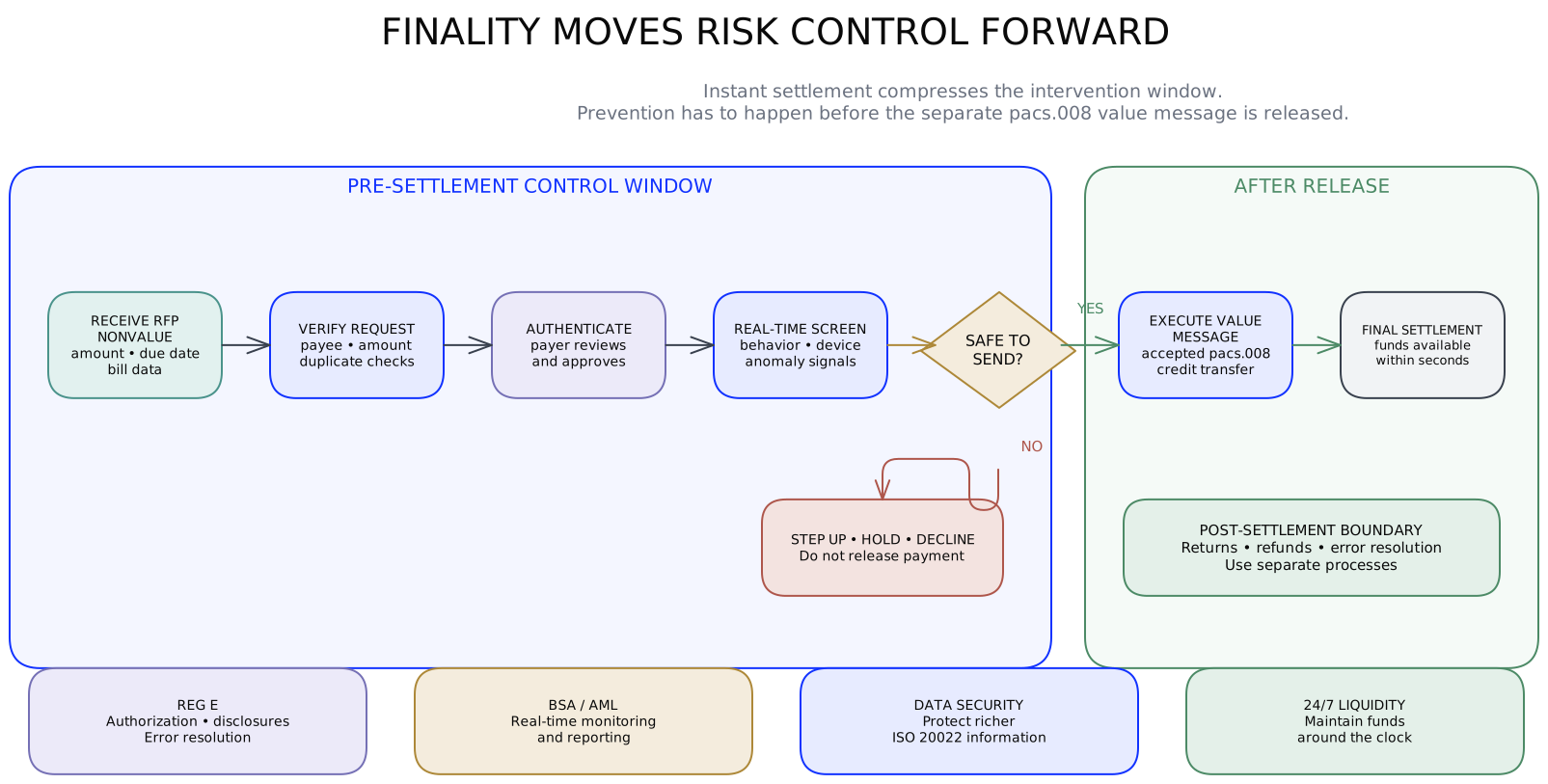
The speed and irrevocability of real-time payments introduce new risk management challenges that must be proactively addressed:
- Fraud Prevention: Because real-time payments are final and settled within seconds, the window for detecting and stopping fraudulent transactions is extremely narrow. This increases the potential impact of fraud schemes like Account Takeover (ATO), where a fraudster gains control of a payer's account and approves fraudulent RfPs or initiates unauthorized real-time credits. Robust, real-time fraud detection and prevention systems before the money moves are therefore essential. This includes strong customer authentication methods (multi-factor authentication) for accessing banking apps and approving payments, as well as sophisticated backend monitoring systems employing behavioral analytics, device reputation scoring, and anomaly detection to identify suspicious activity before a payment is executed. Liability frameworks for unauthorized transactions in an RfP context also need clear definition.
- Error Resolution: The finality of settlement makes correcting erroneous payments (e.g., duplicate payments, payments sent to the wrong recipient, incorrect amounts approved) significantly more complex than reversing an ACH transaction. While prevention is key, clear and expedited processes for dispute resolution and recovery of misdirected funds are necessary to maintain user confidence. This may require enhanced collaboration between FIs and potentially new mechanisms beyond traditional chargeback rights.
- Liquidity Risk Management: For participating FIs, the 24/7/365 nature of real-time settlement requires changes to traditional liquidity management practices, which often rely on end-of-day net settlement. FIs must maintain adequate liquidity in their accounts with the network operators (The Clearing House or the Federal Reserve) around the clock to meet payment obligations as they occur in real-time. FedNow offers specific Liquidity Management Transfer (LMT) capabilities to assist with this. This necessitates more sophisticated intraday liquidity monitoring and forecasting capabilities.
8.3 Driving ecosystem adoption
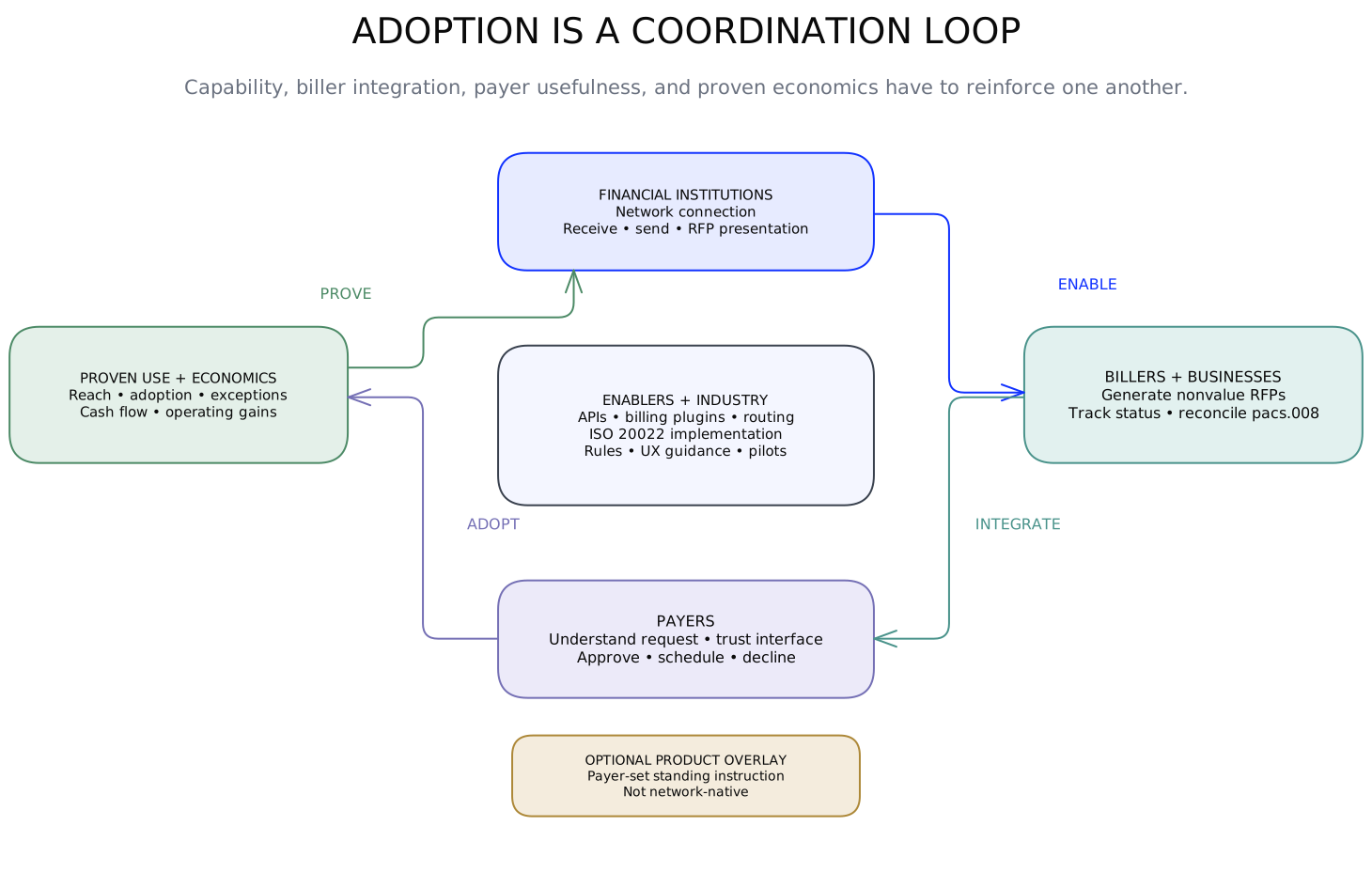
Overcoming inertia and achieving critical mass for RTRP requires a coordinated effort to drive adoption across all stakeholder groups:
- Biller Readiness and Incentives: Convincing billers to undertake the necessary system integrations requires a clear demonstration of return on investment (ROI). This involves not only potentially competitive transaction pricing but also quantifying the savings from reduced payment failures, lower operational costs (reconciliation, exceptions), and the value of improved cash flow. Solution providers offering easier integration pathways and FIs providing supportive services can lower the barrier to entry. Highlighting successful early adopters and specific use case benefits will be key.
- FI Participation and Reach: Ubiquitous reach is arguably the most critical factor for network effects to materialize. A payer needs to be confident that they can receive RfPs from most of their billers, and a biller needs to know they can reach the vast majority of their customers via RTRP/RfP. Ensuring that a high percentage of U.S. Demand Deposit Accounts (DDAs) are reachable via RTP and/or FedNow (current estimates suggest RTP reaches ~70%, FedNow is growing rapidly), and that the associated FIs support RfP functionality, is essential for RTRP to become a mainstream payment method. Initiatives encouraging broader FI participation, especially among smaller institutions, are vital. The current hesitation among FIs to participate in instant payment send is a foundational roadblock to any real-world usage.
- Consumer/Payer Education and Experience: Payers need to understand what RfP is, why it benefits them (control, transparency), trust the security of the process, and be given alternatives to solely managing the experience from within their banking application or interface. A confusing, unreliable, or poorly designed user experience will be a major deterrent to adoption, regardless of the underlying technical benefits. Coordinated educational campaigns by FIs, fintechs, and billers are needed to build awareness and comfort with this new payment interaction model.
- Role of Third-Party Providers: Fintech companies and traditional payment processors play a crucial enabling role. They can develop overlay services that simplify RTRP/RfP integration for billers (e.g., API-based solutions, billing platform plugins), provide value-added capabilities (e.g., advanced analytics, reconciliation tools), and potentially offer innovative payer-facing applications for managing payments. Their expertise and ability to innovate quickly can significantly accelerate market adoption.
8.4 Regulatory and compliance landscape
The deployment of RTRP must navigate the existing regulatory framework while potentially prompting consideration of new guidance:
- Alignment with Existing Rules: RTRP transactions, particularly consumer payments, must comply with established regulations such as Regulation E (Electronic Fund Transfer Act) regarding consumer protections, authorization requirements, error resolution, and liability for unauthorized transactions. BSA/AML (Bank Secrecy Act / Anti-Money Laundering) requirements for transaction monitoring and reporting remain critical, potentially requiring adjustments to monitoring systems for real-time speeds.
- Need for Specific Guidance: The unique characteristics of RTRP, especially RfP and instant finality, may necessitate updated regulatory guidance or industry best practices. Areas requiring clarity could include specific authorization language for RfP-based recurring payments, liability allocation in certain fraud scenarios (e.g., involving compromised payer credentials approving an RfP), and appropriate disclosures to consumers.
- Data Privacy and Security: The ability of RTRP to carry richer data via ISO 20022 raises considerations regarding data privacy (e.g., GDPR, CCPA analogues) and the security measures needed to protect potentially sensitive information embedded within payment messages. Compliance with data protection regulations and robust security protocols are essential.
Perhaps the most significant overarching challenge to RTRP adoption lies in overcoming the classic "chicken-and-egg" coordination problem inherent in any network-based ecosystem. Billers may hesitate to invest significantly in integrating RfP capabilities until a critical mass of their customers are reachable via FIs that support receiving and presenting RfPs effectively. Conversely, FIs might prioritize other initiatives until there is clear demand from billers sending RfPs and from consumers asking for the ability to manage them. Consumers, in turn, won't develop familiarity or demand for the service until their banks offer a seamless interface and their billers start sending RfPs. Breaking this stalemate requires proactive, coordinated action across the ecosystem. This underscores the vital role of industry organizations like the U.S. Faster Payments Council in fostering dialogue, facilitating the development of shared standards and operating rules, promoting pilot programs, and championing the value proposition to all stakeholder groups simultaneously to catalyze momentum and bridge the initial adoption gap.
The irrevocability inherent in real-time payments fundamentally shifts the emphasis of risk management compared to traditional systems like ACH, which rely heavily on post-transaction reversal mechanisms (NSF returns). With RTRP, the ability to easily claw back funds after settlement is largely eliminated. Consequently, the focus must pivot decisively towards pre-transaction prevention. This necessitates significant investment by FIs, and potentially by billers initiating RfPs, in more sophisticated, real-time fraud detection tools and processes. Strategies must emphasize robust identity verification and authentication at the point of payment initiation or RfP approval, real-time transaction monitoring leveraging AI and machine learning to detect anomalies, and potentially new liability frameworks that reflect the shift towards prevention over remediation. This change in risk posture is a critical adaptation required for the safe scaling of instant payments.
While technical standards like ISO 20022 address message formats, achieving effective standardization must extend to the user experience (UX). The success of RfP, in particular, hinges on consumers finding it easy and intuitive to manage payment requests within their chosen banking application. If each financial institution presents RfPs differently, uses confusing terminology, or implements cumbersome approval workflows, the resulting friction and cognitive load on the user could severely impede adoption, irrespective of the underlying benefits like enhanced control. Therefore, industry collaboration on UX guidelines, best practices for RfP presentment, and consistent terminology is not merely a technical detail but a crucial factor for ensuring a seamless and trustworthy experience that encourages widespread consumer uptake. A predictable and user-friendly interface across different platforms is paramount for RfP to succeed.
9. Strategic recommendations for the U.S. payments ecosystem
Realizing the full potential of Real-Time Recurring Payments requires proactive engagement and strategic investment from all key participants in the U.S. payments ecosystem. The following recommendations outline key actions for each stakeholder group:
9.1 Financial institutions: Banks and credit unions
- Prioritize Network Connectivity and Functionality: Actively connect to at least one, and ideally both, real-time payment networks (RTP and FedNow). Crucially, move beyond basic payment capabilities by fully implementing support for receiving, processing, and presenting Request for Pay (RfP) messages, as well as support for sending payments.
- Develop Modern User Experiences: Invest in designing and deploying intuitive, secure, and user-friendly interfaces within third-party online and mobile banking platforms for customers to manage RfPs. This includes clear notifications, easy review of request details, simple approval/scheduling/decline options, and transparent status tracking.
- Real-Time Risk Management: Implement robust, real-time fraud detection and prevention tools specifically designed for instant payments. This includes strong customer authentication, behavioral analytics, and rapid response capabilities. Develop clear protocols for handling errors and disputes in a real-time environment.
- Educate Customers: Proactively educate both consumer and business customers on the features, benefits (especially control and transparency), and usage of RTRP and RfP services. Address security concerns and build trust in the new mechanisms.
- Collaborate on Rules and Standards: Actively participate in industry forums, such as the FPC, to contribute to the development and refinement of clear, practical operating rules, liability frameworks, and technical standards for RTRP/RfP to ensure interoperability and consistent practices.
9.2 Billers, merchants, and corporates
- Conduct Strategic Evaluation: Assess RTRP/RfP not just as a payment method but as a strategic tool. Perform a Total Cost of Ownership (TCO) analysis comparing RTRP to existing ACH Debit and CoF methods, factoring in the quantifiable benefits of reduced payment failures, lower operational costs (exception handling, reconciliation), and improved cash flow.
- Identify High-Impact Use Cases: Pinpoint specific areas within operations where RTRP/RfP can deliver the most significant value - e.g., managing variable bills, reducing subscription churn, improving B2B payment efficiency, or offering innovative payment options like pay-over-time.
- Plan for Integration: Develop a roadmap for integrating RfP generation and real-time payment reconciliation capabilities into billing, ERP, and accounts receivable systems. Partner with financial institutions, payment processors, or fintech providers to leverage their expertise and potentially utilize turnkey solutions to ease integration.
- Drive Customer Adoption: Develop clear communication strategies to inform customers about the availability and benefits of new RTRP/RfP payment options. Emphasize the enhanced control, transparency, and convenience to encourage uptake. Consider incentives for early adoption where appropriate.
- Engage in Standardization Efforts: Participate in industry discussions and FPC workgroups related to RTRP standards and implementation guidelines to ensure that evolving practices meet business needs and are practical to implement.
9.3 Payment processors and fintech enablers
- Develop Enabling Solutions: Create and market solutions that simplify the adoption of RTRP/RfP for both financial institutions (e.g., core banking integration modules, RfP management platforms) and businesses (e.g., API-based integration tools, billing system plugins, SMB-focused solutions).
- Build Value-Added Services: Innovate by building services that leverage the unique capabilities of real-time rails. Examples include enhanced automated reconciliation tools using ISO 20022 data, real-time liquidity management solutions for corporates, API platforms, or dynamic discounting applications triggered by real-time payments.
- Obsess Over Payer Experience: Explore opportunities to develop user-facing applications or tools that might offer consolidated management of RfPs across multiple FIs or provide additional financial management insights based on real-time payment data, complementing FI offerings.
- Promote Standardization: Contribute technical expertise to the development and promotion of clear, open standards for RTRP/RfP implementation to foster interoperability and reduce friction across the ecosystem.
9.4 Payments industry
- Facilitate Ecosystem Collaboration: Continue to serve as a crucial forum for bringing together diverse stakeholders (FIs, billers, fintechs, regulators) to address collective action problems like the "chicken-and-egg" adoption hurdle. Foster dialogue, share best practices, and coordinate efforts.
- Champion Standards and Rules: Lead efforts to develop, publish, and promote the adoption of clear, practical, and harmonized operating rules, technical standards (including ISO 20022 implementation guidelines), and UX best practices for RTRP/RfP to ensure consistency and interoperability.
- Provide Education and Research: Continue to conduct and disseminate further research on RTRP market trends, use case adoption, economic benefits, and implementation challenges. Provide educational resources and toolkits to help stakeholders navigate the transition to faster payments.
- Monitor Risk and Regulatory Landscape: Continuously monitor the evolving risk environment associated with real-time payments and ensure that regulatory frameworks (e.g., Reg E, BSA/AML) remain appropriate and provide necessary clarity without stifling innovation. Engage with regulators to address emerging issues specific to RTRP/RfP.
- Encourage Broad Access: Promote initiatives aimed at encouraging broad participation from FIs of all sizes to ensure ubiquitous reach and equitable access to the benefits of faster payments for all consumers and businesses across the United States.
The successful implementation and adoption of RTRP is not the responsibility of any single stakeholder group but requires a coordinated, strategic approach. These recommendations are interconnected; progress in one area often enables or accelerates progress in others. For instance, FI investment in RfP capabilities is necessary for billers to offer the service, while clear standards promoted by the FPC make integration easier for both FIs and billers. Fintech enablers can bridge gaps and accelerate adoption, but they rely on the underlying network infrastructure provided by FIs and networks. Therefore, sustained collaboration and alignment across the ecosystem are paramount.
The immediate focus is often on implementing basic RTRP/RfP functionalities to address existing pain points, but the strategic vision should extend further. Stakeholders should be encouraged to view the real-time payment infrastructure not just as a replacement for legacy systems, but as a platform for future innovation. The unique combination of speed, data richness, and payment certainty offered by RTRP enables entirely new possibilities. Examples could include sophisticated cash flow forecasting tools leveraging real-time transaction data, dynamic discounting offered by suppliers in exchange for immediate payment initiated via RfP, or more integrated procure-to-pay and order-to-cash processes. Encouraging exploration of these next-generation, value-added services will be crucial for maximizing the long-term economic benefits of the investment in real-time rails and positioning RTRP as a catalyst for broader transformation in commerce and financial management.
10. Conclusion: The future of recurring payments is real time
The analysis presented in this report compellingly demonstrates that Real-Time Recurring Payments (RTRP) represent a transformative opportunity for the U.S. payments landscape. By leveraging the capabilities of the RTP and FedNow networks, RTRP offers fundamental improvements over traditional recurring payment methods like ACH Debit and Card-on-File. The documented shortcomings of these legacy systems - including payment latency, high failure rates leading to significant costs for both consumers (over $5.8 billion in reported overdraft/NSF fees in 2023) and businesses (operational burdens), involuntary churn impacting subscription revenues (potentially costing $129B+ by 2025), reconciliation challenges due to limited data, and a pervasive lack of payer control and transparency - create a clear need for innovation. RTRP, particularly through the Request for Pay (RfP) mechanism, directly addresses these pain points by providing payers with unprecedented control and visibility, while offering payees the benefits of immediate funds availability, drastically reduced payment failures, and data-rich transactions that streamline reconciliation.
The scale of the opportunity is immense. While a single total market figure is elusive, the trillions processed annually via ACH consumer debits ($10.96T in 2024) and cards ($9.367T U.S. Visa/MC purchase volume in 2024), alongside the enormous B2B payments market, indicate the massive potential addressable market. The impact spans numerous industries and use cases, from revolutionizing consumer bill pay and subscription management to enabling new experiences in rent payment and loan servicing, B2B transactions, and future innovations that we can only begin to speculate upon.
However, realizing this potential requires navigating significant implementation hurdles. Technical integration for both financial institutions, payment service providers, and billers, the critical need for standardization in processes and user experiences, the development of robust real-time risk management capabilities, and overcoming the ecosystem coordination challenges to achieve widespread adoption are formidable tasks.
Success hinges on sustained investment, close collaboration among all stakeholders facilitated by organizations like the FPC, a relentless focus on creating seamless and secure customer experiences, and the establishment of clear operating rules and standards.
The transition to real-time recurring payments should not be viewed as merely an incremental upgrade. It represents a foundational shift towards a more efficient, transparent, secure, and dynamic payments ecosystem in the United States. It offers the potential to reduce systemic costs, improve financial health for consumers and businesses, and serve as a platform for future financial innovation. The path forward requires commitment and concerted action, but the destination - a truly modernized payments landscape - promises substantial rewards for the entire economy. Stakeholders across the payments value chain are urged to actively engage in shaping this future, ensuring the U.S. fully capitalizes on the transformative potential of real-time payments.
INSTANT RECURRING PAYMENTS · © 2026